


Best Nutrients for Immunity: A Liquid Vitamin Guide

What are the best nutrients for immunity? Start with the basics your body needs for normal function, not a promise of stronger defenses. Vitamin C, vitamin D, zinc, and other nutrients are often promoted as immune boosters, but no single nutrient or supplement can guarantee immunity. The practical goal is to meet your nutritional needs, not chase a miracle.
This guide explains how key nutrients support normal immune function, where to find them in everyday foods, and how to assess supplement claims. It also covers when a liquid vitamin may be worth discussing with a healthcare professional, particularly if you are an older adult, have a health condition, or take medication. Use the information first to make a plan and ask a qualified professional about questions specific to you.
Table of Contents
Best nutrients for immunity: what they do, and what they cannot promise
Immune-supporting nutrients are vitamins and minerals involved in the body’s normal defenses. Their roles include helping maintain protective barriers and supporting immune cell function. They are foundational, not a guarantee against infection. A balanced diet can help meet nutrient needs, but whether a supplement is useful depends on factors such as food intake, health, age, and individual circumstances.
Nutritional immunology explores the relationship between diet and immune function. The key distinction is that addressing a nutrient shortfall supports normal processes, while taking extra nutrients, is not proven to prevent or treat every infection. The NIH Office of Dietary Supplements provides evidence-based summaries of these nutrients and their roles.
Which nutrients are commonly associated with immune function?
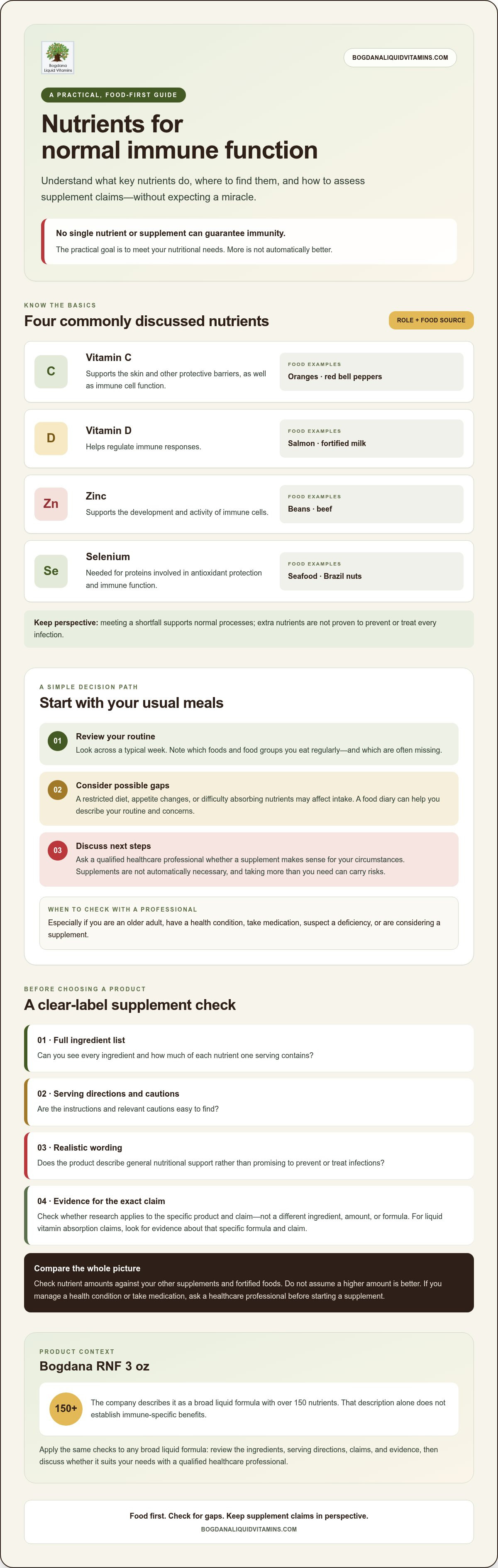
Vitamin C supports the skin and other protective barriers, as well as immune cell function. See the NIH vitamin C fact sheet.
Vitamin D helps regulate immune responses. The NIH vitamin D fact sheet explains its role in immune function.
Zinc supports the development and activity of immune cells. The NIH zinc fact sheet also describes how inadequate intake can affect immune function.
Selenium is needed for proteins involved in antioxidant protection and immune function. Learn more in the NIH selenium fact sheet and explore the benefits of trace minerals.
A healthy immune system relies on a complex network of multiple micronutrients and macronutrients working together. These are among the best nutrients for immunity to understand, but more is not automatically better. If you suspect a deficiency or are considering a supplement, discuss your needs with a qualified healthcare professional.
How to get immune-supporting nutrients and assess whether you need a supplement
Start with food. A varied eating pattern can provide a range of nutrients through everyday meals. For example, oranges and red bell peppers provide vitamin C; salmon and fortified milk can provide vitamin D; beans and beef contain zinc; and seafood and Brazil nuts are sources of selenium. The Harvard T.H. Chan School of Public Health’s Nutrition and Immunity guide offers more context on food and immune health.
Review your usual meals. Look across a typical week rather than judging your diet by one day. Note which foods and food groups you eat regularly and which are often missing.
Consider possible gaps. A restricted diet, appetite changes, or difficulty absorbing nutrients may affect intake. Keeping a food diary can help you describe your routine and concerns during a conversation with a healthcare professional.
Discuss next steps. Ask a qualified healthcare professional whether a supplement makes sense for your circumstances. Supplements are not automatically necessary, and taking more than you need can carry risks.
How can you make careful supplement choices?
Read the full ingredient list and serving directions before choosing a product. Compare the amount of each nutrient per serving with nutrients in your other supplements and fortified foods. Do not assume a higher amount is better. If you manage a health condition or take medication, check with a healthcare professional before starting a supplement since ingredients may affect your care. Claims about liquid vitamins for optimal absorption also deserve scrutiny: look for evidence that applies to the specific formula and the specific claim.
If you are exploring a broad liquid formula, you can review Bogdana’s liquid vitamin options and their ingredient information. Apply the same careful checks you would use for any supplement, and ask a healthcare professional whether it suits your needs.
How to evaluate an immune-support supplement without overpromising
Good supplement decisions start with clear information, not bold promises. Use this checklist to assess a product’s details and claims:
Relevant evidence: Does the research support the exact product and claim, rather than a different ingredient, amount, or formula? Harvard’s Nutrition and Immunity overview provides useful context on diet and normal immune function.
What should readers know about a broad liquid formula?
Bogdana RNF 3 oz is described by the company as a broad liquid micronutrition formula containing over 100 nutrients. This description does not establish immune specific benefits, so you should check the ingredient information rather than assume a particular nutrient is included. The company reports a nutrient absorption rate of up to 98%. Treat this as a company claim, not as an independently established result.
For a closer look, review the RNF ingredient list and consider how the formula fits your needs with a qualified healthcare professional. The best nutrients for immunity are not a one size fits all formula, and no supplement guarantees an immune outcome. To explore the product details, visit the Bogdana liquid vitamin shop.
Build your immune nutrition routine with confidence
The best nutrients for immunity are those that support normal immune processes, but no supplement can promise to prevent infection. Start with varied foods, consider your personal needs, and ask a healthcare professional before adding a supplement, especially if you manage a condition or take medication. Check labels for clear ingredient information, serving directions, and claims supported by relevant evidence.
Bogdana RNF 3 oz is a broad liquid formula that the company describes as containing over 100 nutrients. The formula is also described as free of chemical additives, preservatives, artificial colors, and artificial sweeteners. Review the ingredient information and consider whether the formula fits your needs. It is not proven to provide immune-specific benefits.
For product and ingredient details, explore the Bogdana liquid vitamin range.
Small, informed choices can help you build a thoughtful wellness routine, one step at a time.
Frequently Asked Questions
Which nutrients are most important for normal immune function?
Vitamin C, vitamin D, zinc, and selenium all play roles in normal immune function. They support processes such as protective barriers, immune cell activity, and regulation of immune responses. The best nutrients for immunity depend on your needs and intake, not a one size fits all formula. The NIH Office of Dietary Supplements provides fact sheets explaining the roles of these nutrients.
Can taking more vitamins improve immunity?
Not necessarily. Getting enough nutrients supports normal body functions, but taking more than you need does not guarantee stronger immunity or prevent infection. High amounts of some vitamins and minerals can cause harm or interact with medicines. Focus on a varied diet, and ask a healthcare professional whether a supplement or a nutrient check may be appropriate for you.
Do liquid vitamins support the immune system better than food?
No format is automatically better than food for supporting normal immune function. A varied diet provides nutrients through foods and meals, while a supplement may help address a specific nutritional need. Liquid vitamins can be a convenient format for some people, but claims of superior absorption depend on the nutrient and product. Check the evidence for the exact formula rather than relying on format alone.
How do I choose an immune-support supplement?
Look for a complete ingredient list, clear serving directions, and realistic wording. Check the amount of each nutrient per serving and whether evidence supports the specific claim and formula. Do not treat a general wellness statement as proof of an immune benefit. If you take medication, manage a health condition, or are unsure what you need, review the product with a qualified healthcare professional.
Disclaimer
The above statements have not been evaluated by the Food and Drug Administration.
The products mentioned are not intended to diagnose, treat, cure, or prevent any disease



Comments