


Easiest multivitamin to take with a practical serving size

If swallowing pills is the sticking point, the easiest multivitamin to take may be a liquid or chewable formula that feels comfortable and fits your routine. Gummies are another option, but check the serving size: a full serving may require more than one gummy.
It’s reasonable to want a simple daily dose without sacrificing nutrients that support normal bodily functions. The best fit depends on more than ease: age, sex, diet, and the amounts of nutrients such as vitamin D, vitamin B12, iron, and calcium all matter. This guide explains how to compare formats and serving sizes, understand the daily dose, and choose an option suited to your age and sex, so taking a multivitamin can feel manageable rather than like another chore.
Table of Contents
1. Advice for choosing multivitamins
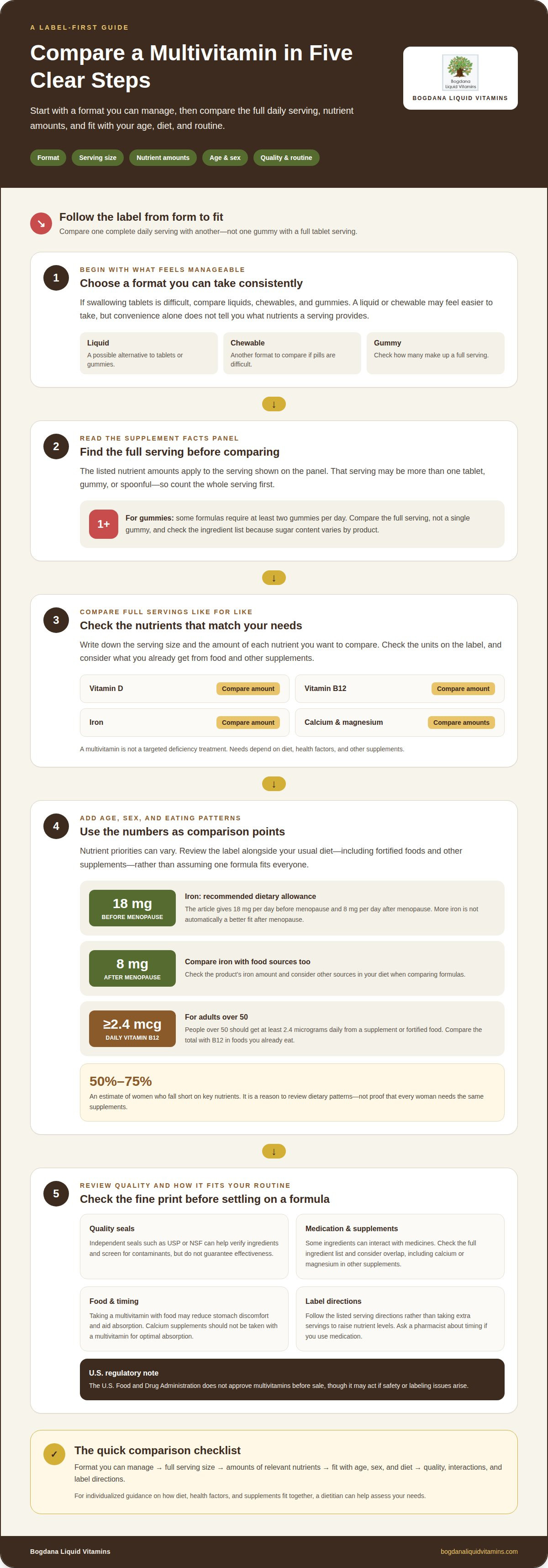
If swallowing tablets is difficult, compare liquids, chewables, and gummies by serving size and listed nutrients. The easiest multivitamin to take is one whose format and daily routine you can manage consistently. Check the Supplement Facts panel for vitamin D, vitamin B12, iron, calcium, and other minerals relevant to your dietary needs.
Gummies can provide vitamins and minerals, but they aren’t automatically more effective than tablets. Some gummy formulas contain higher nutrient amounts because manufacturers account for expected degradation, and they often require at least two gummies per day. Gummies also tend to cost more than pills. For U.S. store and online prices, compare the serving size and number of servings rather than assuming every format costs the same. Sugar content varies by product, so read the ingredient list and keep gummies away from children to reduce the chance of accidental overconsumption.
Some supplement ingredients can interact with medicines, so consider the full ingredient list and medication schedule together. Taking a multivitamin with food may reduce stomach discomfort and aid absorption. Calcium supplements shouldn’t be taken with a multivitamin for optimal absorption. A practical next step: follow the label’s serving directions and ask a pharmacist about timing if you use medication.
2. Daily dose and serving size
Start with the serving size on the Supplement Facts panel. It shows the amount to take to get the listed nutrient amounts, which may not be the amount in one tablet, gummy, or spoonful. If a serving requires multiple gummies, count the full serving before comparing its nutrient levels with another format.
Then read the amounts for each nutrient. Look for vitamin D, vitamin B12, magnesium, calcium, and iron, and note the units shown. The label helps you see what a daily serving contributes alongside your dietary intake. Avoid treating a multivitamin as a targeted deficiency treatment: an individual’s needs depend on diet, health factors, and other supplements. A dietitian can help assess how those pieces fit together.
Before choosing, check the directions, form, and ingredient list. A liquid may suit someone who finds tablets difficult to swallow, but the serving size still matters. Follow the label rather than taking extra servings to raise nutrient levels. Combining supplements can also duplicate ingredients, such as calcium or magnesium already included in a multivitamin.
For a practical comparison, write down the serving size and the amounts of nutrients you care about for each option. Compare like with like: one full daily serving against another, not one gummy against a tablet serving. If you’re considering a liquid format, browse the liquid vitamin options with serving directions in mind. A clear label makes it easier to choose a manageable routine without overlooking what each dose provides.
3. Multivitamins for different age and sex groups
Age and sex can help determine which vitamins and minerals deserve attention, but eating patterns matter too. An estimated 50% to 75% of women fall short on key nutrients. Use that as a reason to review your dietary pattern, not as proof that every woman needs the same supplements. A multivitamin’s amounts should make sense alongside foods you regularly eat, including sources of potassium.
Iron needs change around menopause. The recommended dietary allowance is 18 milligrams per day before menopause and 8 mg after menopause. That difference matters when comparing formulas: a product with more iron isn’t automatically a better choice for postmenopausal women. Review the label’s iron amount and consider other sources in your diet before adding a supplement.
For adults over 50, vitamin B12 deserves particular attention. People over 50 should get at least 2.4 micrograms of vitamin B12 daily from a supplement or fortified food. Check whether a multivitamin contains B12 and compare its amount with fortified foods you already eat. This helps you assess the daily total without assuming every age-specific product is alike.
Dietary patterns and nutrient priorities can vary by age and sex. Note your age group, sex, eating habits, and nutrients you already get from other supplements, then compare them with the product’s listed amounts. If a liquid format suits your routine, consider Bogdana Liquid Vitamins for Women and Men.
Bogdana Liquid Vitamins
Bogdana Liquid Vitamins offers liquid options for adults, seniors, women, and men who prefer a format other than tablets or gummies. If swallowing pills makes a supplement routine difficult, a liquid formula may be a practical alternative. Compare the serving directions and nutrient information with your age, sex, and dietary needs.
Options include Bogdana Liquid Vitamins for Adults and Seniors, Bogdana Liquid Vitamins for Women and Men, and One Product for Overall Health. Bogdana RNF, or Rejuvenating Nutritional Formula, contains over 100 nutrients. Reviewing the formula’s ingredient information helps you understand which vitamins, minerals, and other nutrients it provides, and how it fits your routine.
If you’d like to discuss which liquid vitamin option may suit your needs, contact Bogdana Liquid Vitamins.
Make your next choice a manageable one
The easiest multivitamin to take is one that fits comfortably into your routine and meets your needs. Consider how your diet, age, and sex shape your nutrient priorities. Choose a format you can manage, then use the product directions to understand the serving size. If you take medication or other supplements, consider how their ingredients fit into your routine.
For a liquid option, Bogdana Liquid Vitamins offers formulas for overall health, including Bogdana RNF and options for adults and seniors. Explore the formulas to see whether a liquid format suits your routine.
A thoughtful, consistent routine is a practical way to support everyday well-being.
Frequently Asked Questions
Can’t swallow pills?
Choose a non-pill format, such as a liquid, powder, chewable, or gummy multivitamin. A liquid can be easier to swallow than a tablet, while a powder can be mixed into a drink if the directions allow. If swallowing difficulty is new or also affects food and drinks, discuss it with a healthcare professional.
What multivitamins are easiest to take: gummies, liquids, powders, or small tablets?
The easiest format depends on what feels manageable. Gummies are chewed, liquids are measured, and powders can be mixed into a drink; tablets still need to be swallowed. Consider texture, taste, preparation, and directions. Choose a form that fits your routine, not just one that seems convenient at first.
What are the easiest-to-swallow multivitamins for adults in the U.S.?
For adults who struggle with tablets, liquids, powders, and chewables, there are practical alternatives to consider. Compare the full serving instructions and nutrient amounts, since a convenient format still needs to fit your needs. In the U.S., product labels can help you assess what a daily serving contains, but no format is automatically right for every adult.
Which multivitamins have the fewest pills per day?
A product with a serving size of one tablet may involve fewer pills than a formula that calls for several. Check the directions, not just the front label, and count the tablets needed for a full serving. If pills are difficult to swallow, a liquid or powder can be easier, but you’ll still need to measure the serving.
What are the best-tasting multivitamin gummies and liquids?
Taste preferences vary, so there isn’t one best flavor for everyone. For gummies, check the ingredient and nutrition panels for sweeteners and sugar. For liquids, review the ingredients and directions. If taste affects whether you’ll use a supplement, choose a format you find pleasant and practical.


