


How to Store Liquid Vitamins After Opening and Choose a Bottle Size

The refrigerator isn’t automatically the right home for every liquid vitamin. To decide how to store liquid vitamins after opening, follow the product label: refrigerate only when it says to, and otherwise keep the bottle tightly capped, upright, in its original packaging, away from heat and direct sunlight.
Storage may seem like a small detail, but it can affect how well you follow a supplement’s directions. It also matters for household safety: keep opened and unopened bottles closed and out of reach of children and pets.
Learn how to follow storage directions, choose a bottle size you can finish within its recommended use window, and build a simple routine to prevent mix-ups. A few thoughtful habits can make your supplement routine easier and safer.
Table of Contents
1. Liquid Supplements: Do They Need Refrigeration?
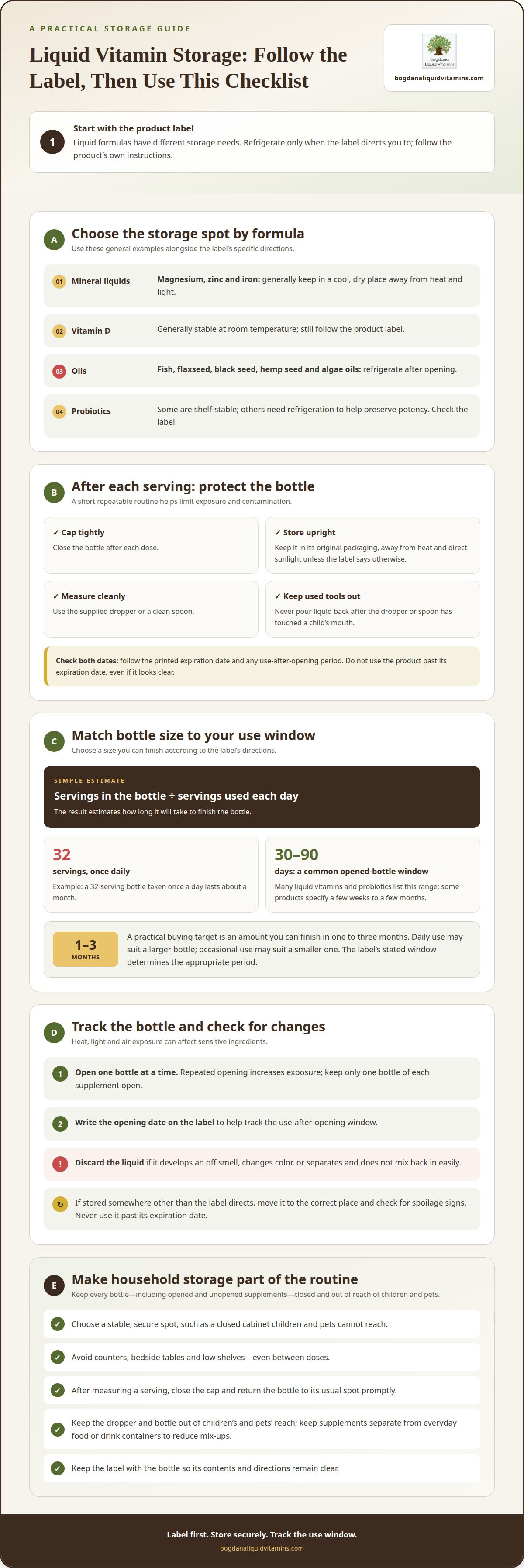
Check the label first. Liquid formulas differ: liquid minerals such as magnesium, zinc, and iron generally belong in a cool, dry place away from heat and light, while vitamin D is generally stable at room temperature. Oils, including fish oil, flaxseed, black seed, hemp seed, and algae oils, should be refrigerated after opening. Some probiotics are shelf-stable; others need refrigeration to help preserve potency.
Should liquid vitamins be refrigerated after opening? Only when the label directs you to refrigerate them. To decide how to store liquid vitamins after opening, follow the product’s specific directions rather than assuming every bottle needs the same temperature.
Check the bottle and packaging for the printed expiration date and any instructions about use after opening. Follow both: don’t use liquid vitamins past their printed expiration date, even if they look clear. If the label specifies a period for using the product after opening, follow that direction.
Keep the bottle in its original packaging, cap it tightly, and store it upright after each dose. Measure with the supplied dropper or a clean spoon, and never pour liquid back into the bottle after the dropper or spoon has touched a child’s mouth. This helps limit contamination.
Discard liquid vitamins if they develop an off smell, change color, or separate and do not mix back in easily. If you stored a bottle somewhere other than the location directed on the label, move it to the correct place and check for these signs of spoilage. Never use it past its expiration date.
2. Buying a bottle size that can be finished in time
Choose a bottle based on your daily serving and the product’s use-after-opening directions. A 32-serving bottle taken once a day lasts about a month. The example makes the calculation simple: servings in the bottle divided by servings used each day tells the time needed to finish it.
How long are liquid vitamins good after opening? Many liquid vitamins and probiotics have a recommended opened-bottle use window of 30 to 90 days, while some products should be used within a few weeks to a few months. The label’s directions determine the appropriate period for that formula, so match bottle size to both your routine and its stated window.
A practical buying target is an amount you can finish in one to three months. If you take a liquid supplement daily, estimate how much you’ll use before choosing a larger bottle. If you use it occasionally, a smaller size may help you finish it within the recommended window. Focus on consistent use, not simply getting the most servings per bottle.
Heat, light, and air exposure can affect sensitive ingredients, and opening a bottle repeatedly increases exposure. Keep only one bottle of each supplement open at a time, and write the opening date on its label. This gives you a clear reference and helps you track the product’s use window.
Compare bottle sizes and serving details among the liquid vitamin options to find a format that suits your routine. A thoughtful choice can help you use the formula consistently and avoid keeping multiple bottles open.
3. Keeping supplements out of reach of children and pets
Proper storage will protect both the supplement and the people and pets in your home. Keep every vitamin and supplement bottle closed and out of reach of children and pets, whether it’s opened or unopened. A cap is only part of the routine; where you store the bottle matters, too.
Choose a stable storage spot children and pets cannot access, such as a closed cabinet they cannot reach. Avoid leaving bottles on kitchen counters, bedside tables, or low shelves, even between doses. After measuring a serving, close the cap and return the bottle to its usual spot right away.
Fit the routine around steps you already take. For example, if you use a liquid vitamin at breakfast, keep the bottle stored securely and bring it out only when measuring a serving. Don’t leave the dropper or bottle where a curious child or pet can reach it. Keep the label with the bottle so its contents and directions remain clear.
A few household habits make storage more consistent:
Store opened and unopened supplements in the same secure location.
Close each cap firmly after measuring a serving.
Return the bottle promptly instead of leaving it on a table or counter.
Keep supplements separate from everyday food or drink containers to reduce mix-ups.
These steps apply to liquid vitamins, minerals, and other supplements. A bottle may contain a concentrated formula, so make storage part of your routine. If several people in your household use supplements, make sure everyone returns each bottle to its secure spot after use.
Bogdana Liquid Vitamins: Bogdana Liquid Vitamins for Adults and Seniors
Bogdana Liquid Vitamins for Adults and Seniors offers a liquid supplement for adults seeking overall wellness support. When choosing a formula to fit your routine, consider its serving directions and bottle size alongside your storage habits. Follow the product label for storage and use-after-opening instructions.
Bogdana RNF, or Rejuvenating Nutritional Formula, contains over 100 nutrients. Its broad nutrient profile may suit adults looking for a comprehensive formula rather than separate individual nutrients. Nutrients, such as vitamins and minerals, support normal bodily functions, but a supplement should fit your personal needs and routine.
Bogdana Liquid Vitamins for Women and Men is another liquid option to explore. Read the label carefully and make your decision, including its storage and serving directions
Explore Bogdana Liquid Vitamins’ liquid supplement options to find a formula that fits your routine.
Build a Routine That Fits Your Life
Wellness habits are easier to maintain when they fit everyday life. Knowing how to store liquid vitamins after opening helps make a supplement routine practical. The formula you choose should suit your nutritional goals and preferences. Consider the role you want a liquid vitamin to play in your routine, then choose an option that feels manageable and intentional.
Explore Bogdana Liquid Vitamins and consider the best fit for your needs.
Small, sustainable choices can help you build a wellness routine with confidence. Choose a pace you can maintain.
Frequently Asked Questions
How should vitamins and minerals be stored?
Store vitamins and minerals according to each product’s label, since formulas have different needs. For products that do not require refrigeration, a cool, dry cupboard away from a sunny window is a practical choice. Avoid humid places such as bathrooms, where moisture can affect storage conditions. Keep each supplement in its original container so its instructions and expiration date remain accessible.
What About Liquid Vitamins?
Liquid vitamins need careful handling because each dose comes from an opened container. Keep the original bottle and its instructions together, and use a clean measuring device for every serving. Avoid utensils with food residue. Return the measure to a clean, dry place afterward, and keep the bottle’s label visible for reference.
Do vitamins need refrigeration?
Not all vitamins need refrigeration; follow the product’s directions. Standard tablets, capsules, and powders are generally stable at room temperature, while certain liquids, oils, and probiotics have different requirements. Vitamin D is generally stable at room temperature. Check the label before changing a product’s storage location, especially when you bring home supplements with different formulas.
Liquid Supplements: Do They Need Refrigeration?
Some do, but liquid supplements don’t share the same refrigeration needs. Follow the bottle’s directions for products, such as probiotics, since some are shelf-stable and others require refrigeration. Don’t freeze liquid supplements: temperatures below 0°C (32°F) may cause ingredients to separate and make doses less uniform.
Should You Store Supplements in the Fridge?
Use the refrigerator only when a supplement’s label calls for it. Refrigeration is not a universal rule, and freezing is not a substitute. For example, keep a room-temperature formula in its recommended storage spot rather than beside refrigerated products. If several household members use supplements, make each product’s directions easy to identify and follow.


