


Daily Nutritional Requirements for Seniors: Key Nutrients and Practical Guidance

What if eating well as you age isn’t about eating less, but choosing each bite more carefully? Aging can affect appetite, energy needs, muscle and bone health, and how well the body absorbs some nutrients. That means the daily nutritional requirements for seniors aren’t one-size-fits-all.
Conflicting advice can make it hard to know what to prioritize or whether a supplement makes sense. This guide explains how needs vary by age and sex, and covers protein, calcium, vitamin D, vitamin B12, fiber, omega-3 fats, and other nutrients. You’ll also learn how to use guidance from sources such as the NIH and National Academies, build a practical food-first routine, and discuss supplement choices with a healthcare professional.
Table of Contents
How daily nutritional requirements for seniors can change with age
Nutrition needs vary with age, sex, health, appetite, and activity. A 70-year-old who walks regularly and eats well may have different needs from someone of the same age managing a chronic condition or reduced appetite. When energy needs shift, nutrient-dense foods can help provide useful nutrition in meals and snacks.
The American Heart Association gives estimated daily calorie ranges for adults 60 and older: 1,600 to 2,200 calories for women and 2,000 to 2,600 for men. These are broad estimates, not individual targets. Activity and personal circumstances affect energy needs. The Dietary Guidelines for Americans, 2025 to 2030, emphasize whole, nutrient-dense foods and protein at every meal. A balanced pattern can include vegetables, fruit, whole grains, protein foods, and dairy or suitable alternatives.
Why one daily target does not fit every older adult
Age and sex influence nutrient reference values, while activity affects energy needs. Dietary patterns matter too. For example, someone who avoids dairy, can plan other calcium sources such as calcium-set tofu or fortified alternatives. Health conditions, appetite, and medicines may also affect what is practical or appropriate, so a standard chart cannot account for every person.
Dietary Reference Intakes are population-based nutrient benchmarks, not a diagnosis or a personalized nutrition prescription. Developed by the National Academies, they include values such as the Recommended Dietary Allowance (RDA), intended to meet the needs of nearly all healthy people in a defined age and sex group. Use these values to understand general targets, then discuss personal needs with a qualified clinician. They help guide decisions but do not replace individualized advice.
For a practical starting point, compare guidance for your age and sex group with your usual eating pattern and activity. The daily nutritional requirements for seniors are guideposts for building a realistic routine, not a single fixed menu or calorie number.
Which nutrients should seniors prioritize in a practical daily eating pattern?
Rather than chasing a perfect menu, build meals from familiar foods that contribute several nutrients at once. The NIH Office of Dietary Supplements and National Academies provide reference values, but food choices and individual needs differ. Nutrient needs and suitable food sources vary with age, sex, health, appetite, and dietary pattern.
Food sources and recommendations for nutrients often discussed in later life
Use these examples as practical starting points. They are not a checklist that means everyone needs supplements:
Protein: Include foods such as eggs, fish, poultry, beans, tofu, or yogurt across meals to meet the body’s ongoing needs.
Fiber: Oats, beans, berries, vegetables, and whole grains add fiber. For adults 60 and older, reference amounts are 21 grams daily for women and 30 grams for men.
Calcium and vitamin D: Milk, yogurt, fortified alternatives, and calcium-set tofu can contribute calcium. Fatty fish and fortified foods provide vitamin D. NIH reference values for calcium are 1,200 mg daily for women over 50, 1,000 mg for men ages 51 to 70, and 1,200 mg for men 71 and older. Vitamin D is 600 IU daily at ages 51 to 70 and 800 IU from age 71.
Vitamin B12: Fish, meat, eggs, dairy, and fortified foods contain B12. The recommended amount for adults is 2.4 micrograms daily. Age and some medicines can affect absorption.
Omega-3 fats: Fatty fish such as salmon can provide omega-3 fats. Food choices can help you include them as part of a varied eating pattern.
Trace minerals: Zinc and selenium are found in foods such as meat, seafood, beans, nuts, and whole grains. A varied diet can provide different sources, while individual needs and suitable choices depend on health and dietary pattern.
Potassium and fluids: Potatoes, beans, leafy greens, bananas, and yogurt provide potassium. Sip water regularly and include soups or other fluids. Thirst may be less noticeable with age, and health conditions can affect suitable potassium intake.
Sex-specific reference values are useful context, but they don’t replace individual guidance. A liquid supplement is a personal choice, not a substitute for varied meals. Bogdana RNF is a liquid nutritional supplement containing over 100 nutrients, and it is free of chemical additives, preservatives, artificial colors, and artificial sweeteners. You can review the liquid vitamin options as one way to explore non-pill nutritional support.
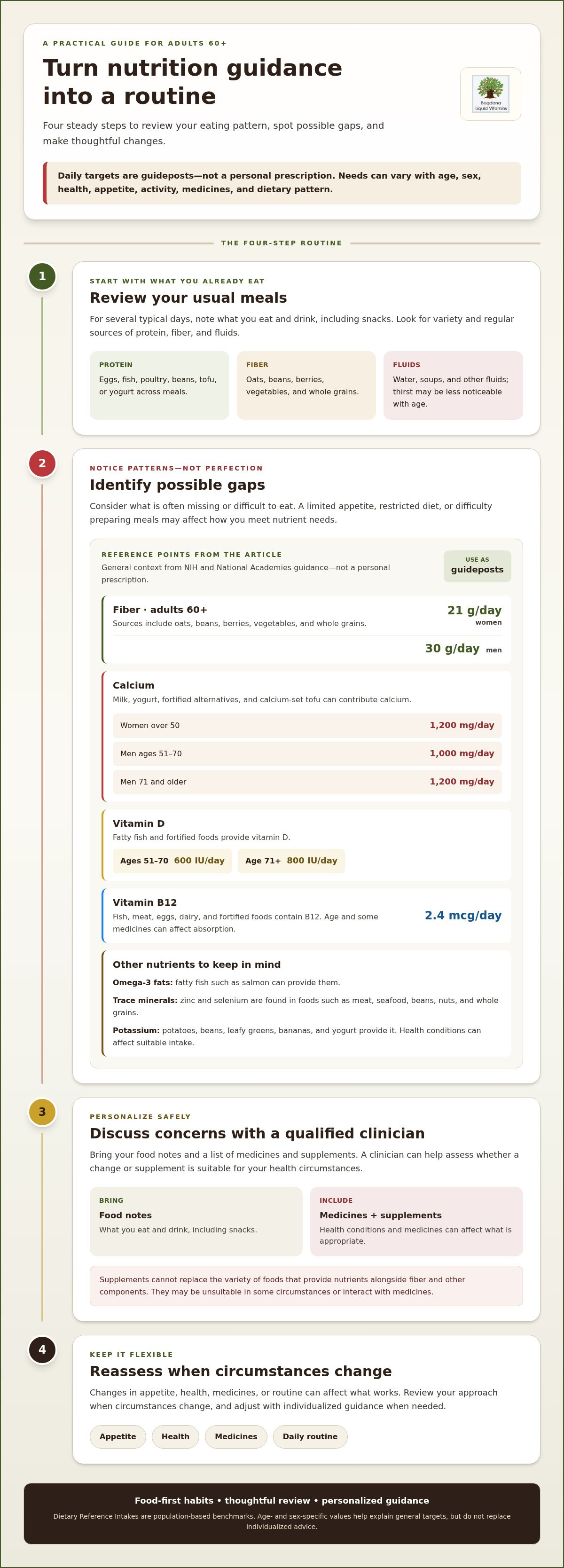
How seniors can turn nutrition guidance into a safe daily routine
Turn general recommendations into a routine you can maintain. A short review of your meals can reveal patterns without calorie counting or a major overhaul. The daily nutritional requirements for seniors are useful guideposts, but food choices and supplement decisions should fit your circumstances.
Review your usual meals. For several typical days, note what you eat and drink, including snacks. Look for variety and regular sources of protein, fiber, and fluids.
Identify possible gaps. Consider what is missing or difficult to eat. A limited appetite, restricted diet, or difficulty preparing meals may affect how you meet nutrient needs.
Discuss concerns with a qualified clinician. Bring your food notes and a list of medicines and supplements. A clinician can help assess whether a change or supplement is suitable for your health circumstances.
Reassess over time. Changes in appetite, health, medicines, or routine can affect what works. Review your approach when circumstances change.
Supplements can’t replace the variety of foods that provide nutrients alongside fiber and other components. They may also be unsuitable in some circumstances or interact with medicines. Include them in a clinician’s review rather than adding them automatically.
When to discuss a supplement with a healthcare professional
Discuss persistent difficulty eating well, questions about a specific nutrient, or any supplement you’re considering. Review ingredients carefully, especially if you take medicines or have a health condition. Bogdana RNF is a liquid nutritional supplement containing over 100 nutrients. Its RNF ingredient list shows what it contains and can help inform a conversation with your clinician. You can also view the liquid vitamin options when considering non-pill nutritional support.
Build a nutrition routine that can grow with you
Your nutrition routine can be a living plan, not a scorecard. Choose one realistic adjustment that fits your preferences, then notice whether it remains manageable as your appetite, activity, or health changes. This steady approach makes daily nutritional requirements for seniors more useful in everyday decisions, without expecting every meal or day to be perfect.
If you’re considering a supplement, use a conversation with a clinician to clarify what you hope it will add and how it fits your routine. A deliberate choice is more helpful than adding products because a general recommendation sounds universal. Keep track of questions as they come up so your next steps feel considered and personal.
Wellness is built through choices you can revisit. Keep moving forward with curiosity and care.
Frequently Asked Questions
What nutrients do seniors need every day?
Daily nutritional requirements for seniors vary by age, sex, diet, and health circumstances. Common priorities include protein, fiber, calcium, vitamins D and B12, potassium, and fluids. Omega-3 fats and trace minerals such as zinc and selenium can also be part of a varied eating pattern. Use NIH and National Academies Dietary Reference Intakes for the relevant age and sex group. An upper limit is a ceiling, not a daily goal, so don’t treat it as a target to reach.
Do seniors need more vitamin B12 as they get older?
Not necessarily. The NIH Office of Dietary Supplements notes that getting B12 from food and absorbing it can be different concerns. Some medicines, including metformin and acid-reducing drugs, may affect B12 status. If you use these medicines or eat few animal or fortified foods, discuss your intake and any concerns with a qualified healthcare professional rather than assuming you need a supplement.
How can seniors meet their daily nutritional requirements through food?
Build meals with a range of foods, and use labels to identify nutrients added through fortification. For example, canned salmon with bones can provide calcium and protein, while some fortified cereals contain vitamins B12 and D. Fortification varies by brand. Frozen vegetables and canned produce can also be convenient options. Adapt choices to your preferences and health needs.
Should seniors take a multivitamin or nutritional supplement every day?
No, not everyone needs a daily supplement. Before adding one, compare its label with other supplements and fortified foods to look for overlapping nutrients, then review your choices with a qualified healthcare professional, especially if you take medicines or manage a health condition. Choose based on an identified need, and avoid relying on claims that promise to prevent or treat disease.


Comments