


Liquid Supplements for Liver Health: A Vital Support Guide

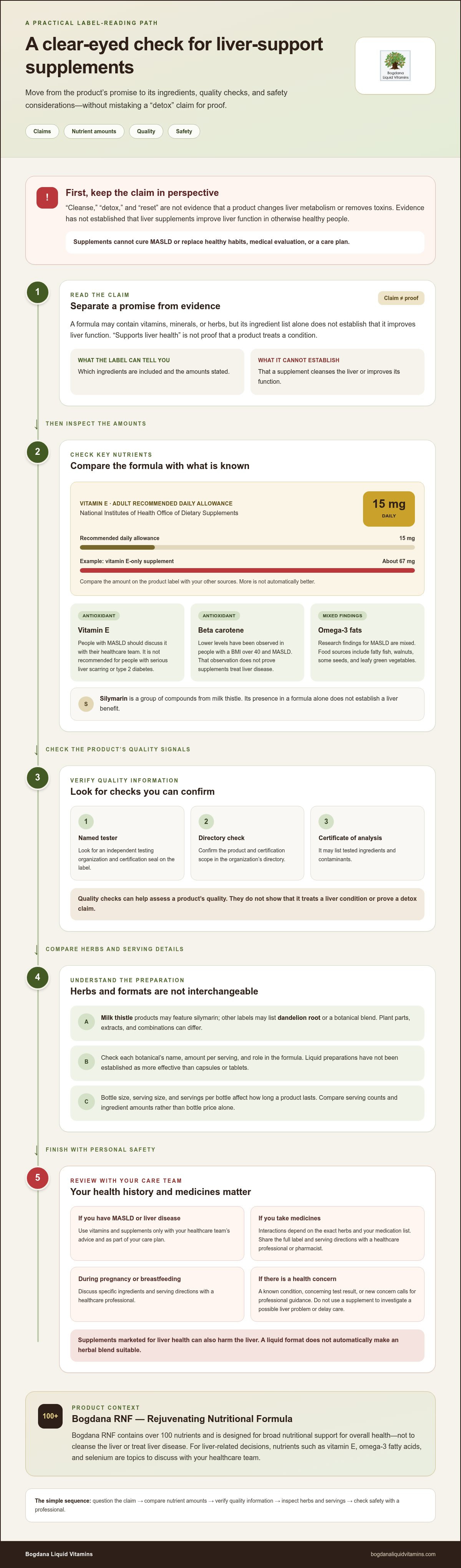
A “liver detox” label isn’t proof that a product cleanses the liver or improves its function. Evidence has not established that liver supplements improve liver function in otherwise healthy people. Liquid supplements for liver health support cannot cure MASLD or replace healthy habits.
It’s understandable to look for extra support when you’re thinking about liver health, especially when products promise a quick reset. A useful next step is separating plausible nutritional support from claims that go too far. This guide explains what research says about silymarin, antioxidants such as vitamin E and beta-carotene, omega-3 fats, and trace minerals such as selenium, and why herbal ingredients don’t all have the same evidence or safety profile. You’ll also learn how to read cleanse and detox claims with a clear eye.
Table of Contents
Antioxidant protection and silymarin
Antioxidants help limit oxidative stress, the process that can damage cells. Vitamin E and beta-carotene are antioxidant nutrients; they support normal nutrition, not a liver cleanse. The National Institutes of Health Office of Dietary Supplements recommends a vitamin E daily allowance of 15 milligrams. Compare that amount with a supplement label before adding another source.
A vitamin E-only supplement may contain about 67 milligrams, considerably more than the recommended daily allowance. More isn’t automatically better. People with MASLD should discuss vitamin E with their healthcare team before taking it. It isn’t recommended for people with serious liver scarring or type 2 diabetes. Keep the full supplement list available so your care team can consider total intake and possible interactions.
Beta carotene is another antioxidant nutrient. People with a BMI over 40 and MASLD often have lower beta-carotene levels than people without MASLD, but that observation doesn’t prove supplements treat liver disease. Omega-3 findings for MASLD are mixed. Food sources include fatty fish, walnuts, some seeds, and leafy green vegetables. Silymarin, a group of compounds from milk thistle, is often included in liver-support formulas. Its presence alone doesn’t establish that a product improves liver health.
To assess a supplement’s quality, look for a named independent testing organization and certification seal on the label. Check the organization’s directory to confirm that the product and certification scope match. A certificate of analysis may also list tested ingredients and contaminants. These checks can help assess quality, but they do not show that a supplement treats a liver condition or prove a detox claim.
Claims about normal liver function and metabolic activity
The liver processes nutrients, medicines, and substances the body needs to break down. Its metabolic work includes handling nutrients such as vitamin B12, iron, and protein. A supplement’s ingredient list shows what it contains, but it can’t establish that the formula improves these processes. Evidence hasn’t established that liver supplements improve liver function in otherwise healthy people.
Be cautious of claims promising a cleanse, detox, or reset. Those phrases don’t demonstrate that a product changes liver metabolism or removes toxins. A formula containing vitamins, minerals, and herbs may provide nutrients, but its ingredients alone don’t prove a liver benefit. Supplements marketed for liver health can also harm the liver, so examine their claims and ingredients carefully.
In the United States, FDA rules distinguish general structure or function claims from claims to diagnose, treat, cure, or prevent disease. A phrase such as “supports liver health” does not prove that a supplement improves liver function or treats a condition.
There’s no single typical price or serving cost for liquid liver supplements. Bottle size, serving size, and servings per bottle determine how long a product lasts. Compare the serving count and ingredient amounts on the label instead of judging value by bottle price alone.
For people with liver disease, supplement ingredients and potential interactions matter. People with MASLD should use vitamins and supplements only with their healthcare team’s advice and as part of their care plan. During pregnancy or breastfeeding, discuss specific ingredients and serving directions with a healthcare professional. A liquid format doesn’t automatically make an herbal blend suitable.
For general nutrient support, explore liquid vitamin options and compare their ingredient labels with your needs.
Herbal ingredients for liver support
Herbal formulas vary in plant parts, extract types, and ingredient combinations. Milk thistle products may feature silymarin, while other labels list dandelion root or a blend of botanicals. These are different preparations, not interchangeable versions of one treatment. When evaluating liquid supplements for liver health support, check the label for each botanical name, amount per serving, and role in the formula.
Liquid preparations haven’t been established as more effective than capsules or tablets. A liquid may suit someone who prefers that format, but compare the stated serving and active ingredients rather than assuming the delivery form determines results. U.S. products marketed for liver health may be single-herb extracts or blends combining botanicals with nutrients.
Interactions between herbs and medicines depend on the specific ingredients and a person’s medication list. Keep the full label, including serving directions, and share it with a healthcare professional or pharmacist before adding a blend. This helps them review the exact combination instead of relying on a broad “liver support” claim. Liquid supplements for liver health support can contain several ingredients in one serving.
Don’t use a supplement to investigate a possible liver problem or delay medical care. A known liver condition, a concerning test result, or a new health concern calls for professional guidance about the cause and appropriate care. Herbal products are not a substitute for evaluation or a treatment plan.
Bogdana Liquid Vitamins: Bogdana RNF - Rejuvenating Nutritional Formula
Bogdana RNF - Rejuvenating Nutritional Formula offers a liquid option for people seeking broad nutritional support for overall health. It contains over 100 nutrients, bringing a range of nutrients together in one formula. This may suit adults looking to support everyday nutrition, rather than seeking a product to cleanse the liver or treat liver disease.
For liver-related decisions, keep targeted nutrients in perspective. Vitamin E, omega-3 fatty acids, and selenium are examples to discuss with your healthcare team, especially if you have a liver condition or take medication. A broad formula isn’t a substitute for medical care or a tailored plan. Bogdana Liquid Vitamins also offers options for adults and seniors, and for women and men.
Explore Bogdana Liquid Vitamins’ liquid formulas on the company website.
Make Your Next Wellness Choice With Purpose
If you’re considering liquid supplements for liver health support, focus on overall nutrition, not promises of a quick reset. Match a product to your goals and daily routine, and follow your healthcare team’s advice, especially if you’re managing a diagnosed condition.
Start by identifying what you want to support and reviewing ingredient labels. A liquid formula for overall nutrition has a different purpose from an herb marketed specifically for the liver. Keep that distinction clear as you choose. Prioritize daily nutrition and following your care plan, and let sound evidence guide your decisions.
Thoughtful choices can make your wellness routine more manageable. Take your next step with confidence and care.
Frequently Asked Questions
What about “liver cleanses” or “liver detox” products?
Those labels don’t prove that a supplement cleanses the liver or removes toxins. The liver already processes substances the body needs to handle, and a product’s name isn’t evidence of benefit. A “detox” blend, for example, may contain milk thistle and other herbs without proving that the combination improves liver function. Treat rapid-reset promises cautiously and review ingredients individually.
What are the claims?
Products may claim to “support liver health,” “protect” the liver, improve metabolism, or provide a cleanse or detox. These phrases are marketing claims, not proof that a product changes liver function or treats a condition. Consider what a claim actually promises, then compare it with evidence for the specific ingredients. A broad label claim can’t establish clinical benefit.
What ingredients in liquid liver supplements have clinical evidence for liver health?
Research has examined milk thistle, vitamin E, and omega-3 fatty acids, but evidence doesn’t establish them as proven liver treatments. Milk thistle was not proven effective to improve liver health, and findings on omega-3s for MASLD are mixed. Vitamin E requires particular care for people with MASLD. Dandelion root also lacks strong evidence for liver ailments.
What does research say about milk thistle for liver health, and what doses were studied?
The evidence of milk thistle effects on liver health remains limited. A Cochrane review assessed 18 studies involving people with cirrhosis, hepatitis B, or hepatitis C. Those findings don’t establish a dependable dose for liver support, so don't assume a dose from a product label is clinically proven. Milk thistle can also cause digestive symptoms or allergic reactions.
What are typical prices and serving costs of popular liquid liver supplements in the U.S.?
There’s no single typical price or serving cost. Bottle size, serving size, and servings per bottle vary, so compare serving counts and ingredient amounts instead of bottle price alone.


Comments