


Liquid Multivitamin Timing: When to Take It With Food

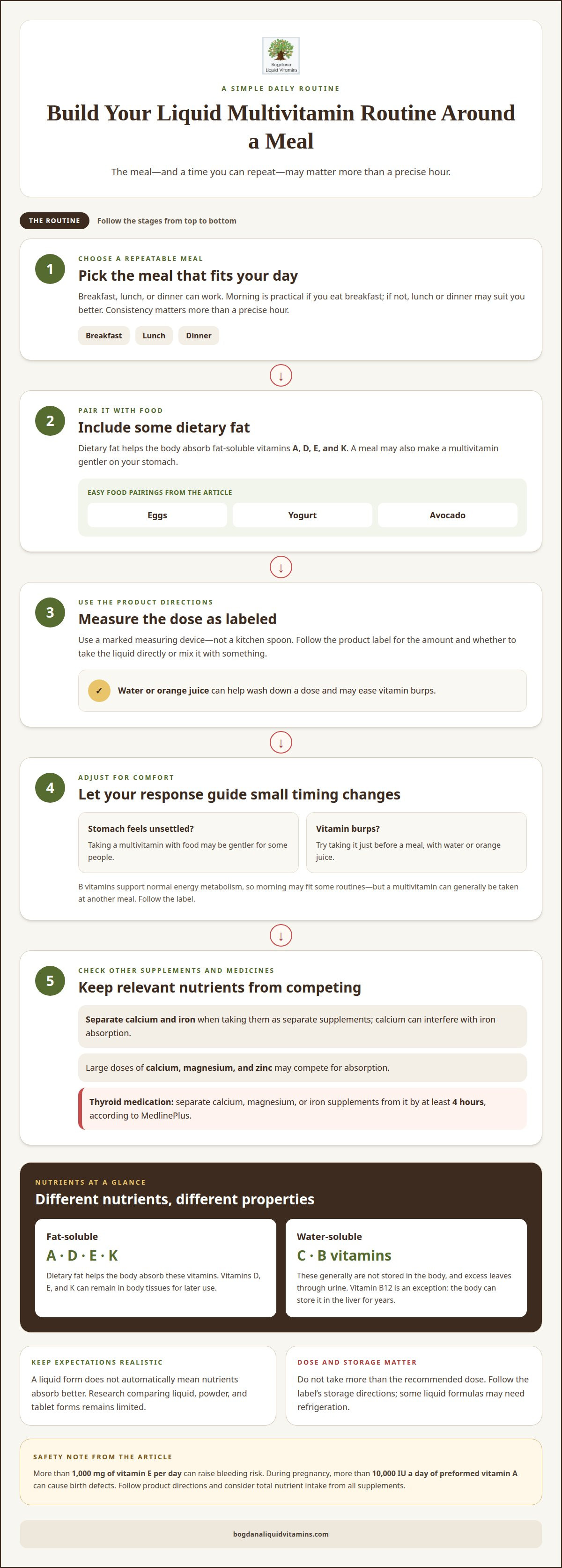
The best time to take a liquid multivitamin may depend more on your meal than the clock. For most people, the best time of day to take a liquid multivitamin is a consistent time with food, ideally alongside a meal that contains some fat. Morning can work well if you eat breakfast; lunch or dinner may be a better fit if you don’t.
It makes sense to want a simple routine that helps your body use the nutrients you take. Fat in food supports the absorption of fat-soluble vitamins, including vitamins A, D, E, and K, while taking a multivitamin with a meal may also be gentler on your stomach. Here, you’ll learn how meal timing affects absorption, when an empty stomach may matter, and how to choose a routine you can stick with.
Table of Contents
Fat-soluble vitamin absorption
The best time of day to take a liquid multivitamin is usually a time you can pair with a meal containing fat. Vitamins A, D, E, and K are fat-soluble, which means dietary fat helps the body absorb them. Breakfast with eggs or yogurt, or lunch with avocado, can provide a practical pairing. A meal also may reduce stomach discomfort.
Measure the liquid dose using a marked measuring device, not a kitchen spoon, and follow the product label for the amount. Take it directly or mix it only as the label allows. A water-based drink, such as water or orange juice, can help wash down the dose and may ease vitamin burps.
Water-soluble vitamins dissolve in water. Vitamin C and the eight B vitamins make up this group; they generally aren’t stored in the body, and excess leaves through urine. Some guidance recommends taking them with water on an empty stomach. However, a multivitamin combines nutrients, so the full formula may be easier on your stomach with food. Vitamin B12 is an exception: the body can store it in the liver for years.
Fat-soluble vitamins, including vitamins D, E, and K, can remain in body tissues for later use. Research has found that taking vitamin D with a fat-containing meal can support absorption. That doesn’t mean you need a complex meal. Focus on a consistent routine and a food pairing that suits your day.
If vitamin burps follow a dose, try taking it just before a meal rather than afterward, with water or orange juice. These simple timing adjustments may affect comfort, but supplements support normal nutrient intake; they aren’t treatments for disease.
With Food or on an Empty Stomach?
For many people, a morning dose with breakfast is a practical routine. A meal containing fat can also support absorption of vitamins A, D, E, and K.
Taking Multivitamins with Food and Fat
Taking a multivitamin with a meal means having it alongside food, preferably with some dietary fat. Eggs, yogurt, or avocado at breakfast are examples. Fat helps the body absorb fat-soluble vitamins, while food may make a multivitamin easier on the stomach. If breakfast is skipped or contains little fat, lunch or dinner can work instead. Take the dose with water or another water-based drink.
Morning Timing and Food Choices
Morning works well if it fits your routine and includes food. B vitamins support normal energy metabolism, so some people prefer taking them earlier. But a multivitamin can generally be taken at another time; consistency and the meal matter more than a precise hour. If you take it on an empty stomach, you may find it less comfortable. Magnesium and other minerals in a formula may also affect how it feels, so follow the product label.
Food and Stomach Upset
Yes, food may help reduce nausea or stomach upset for some people. Follow the label’s dosage and timing directions, and don’t take more than the recommended dose. Excess amounts of certain nutrients can be harmful: according to the National Institutes of Health, Office of Dietary Supplements, more than 1,000 mg of vitamin E per day can raise bleeding risk. During pregnancy, more than 10,000 IU a day of preformed vitamin A can cause birth defects.
Liquid formulas may need refrigeration, so follow the label’s storage instructions. For options designed for adults, explore liquid vitamin formulas.
Absorption and bioavailability of liquid multivitamins
Timing can depend on a formula’s ingredients, your routine, and other supplements or medications. A liquid form doesn’t automatically mean nutrients absorb better; research comparing liquid, powder, and tablet forms remains limited.
Spacing Supplements for Absorption
Spacing means taking certain supplements at different times so one nutrient is less likely to interfere with another. Calcium can interfere with iron absorption, so avoid taking them together when using separate supplements. Large doses of calcium, magnesium, and zinc may also compete for absorption. If you take thyroid medication, separate calcium, magnesium, or iron supplements from it by at least 4 hours because these minerals can reduce the medication’s strength, according to the National Library of Medicine, MedlinePlus.
Factors and Interactions Affecting Absorption
Absorption can vary with dietary fat, other foods or vitamins, alcohol, age, health conditions, and medications. For example, vitamins D, E, and K are fat-soluble, while vitamin C and B vitamins dissolve in water. A delayed-release capsule is designed to dissolve later than a standard capsule, but it’s a different format from a liquid multivitamin. Follow each product label’s timing directions.
B vitamins support normal energy metabolism, so morning may suit your routine. Some people find vitamin B12 energizing and prefer taking it earlier, especially if they’re concerned about sleep. Vitamins and minerals also support normal functions, including immune function, but a supplement’s effect depends on its ingredients and how you use it. Remember, taking multiple dietary supplements can create overlapping nutrients, so consider the combined amounts you consume.
Explore liquid vitamin options
Bogdana Liquid Vitamins
Bogdana Liquid Vitamins offers liquid formulas for adults, seniors, women, and men, providing a practical option for people building a consistent nutrient routine. If you’re weighing meal timing, the same principle applies: follow the product label and take your dose with a meal when that suits the formula and your routine.
Options include Bogdana RNF - Rejuvenating Nutritional Formula and Bogdana Liquid Vitamins for Adults and Seniors. The formula provides a range of nutrients supporting normal bodily functions, including vitamins and minerals. Choose an option that fits your needs, then make its recommended serving part of a regular daily habit.
For questions about Bogdana Liquid Vitamins, contact the team.
Build a Routine That Works for You
Use your meal pattern, daily schedule, and supplement label to shape a routine you can maintain. The best time of day to take a liquid multivitamin is when it fits your meals and supports consistent use. Nutrients such as vitamins D and B12, and minerals like magnesium, have different roles in normal body functions, so consider the formula’s directions rather than assuming every nutrient follows the same timing rule.
Bogdana Liquid Vitamins offers Bogdana RNF - Rejuvenating Nutritional Formula, which contains over 100 nutrients in one product for Overall Health. These options give you a place to explore liquid nutrition as part of your everyday wellness routine.
Explore One Product for Overall Health
Small, steady habits can help make a daily routine easier to maintain.
Frequently Asked Questions
When is the Best Time to Take a Multivitamin?
Choose a regular time you can reliably pair with your dose. For many people, breakfast is the best time to take a liquid multivitamin, but lunch or dinner may fit better if mornings are rushed or breakfast is often skipped. Linking the dose to an everyday cue, such as clearing your lunch plate, can help you remember it.
Which Supplements Should be Taken With Lunch or Dinner?
Take a multivitamin with lunch or dinner if your breakfast lacks fat-containing foods. Calcium carbonate should be taken with a meal, because stomach acid produced during eating helps absorption. Some minerals can also be easier on the stomach with food. Follow each supplement’s label, especially if you take several at different times.
Should a liquid multivitamin be taken with food or on an empty stomach?
For most multivitamins, taking the dose with food is a practical choice if an empty-stomach dose causes discomfort. If you’re trying an empty-stomach dose, use the label’s serving directions and note whether it feels comfortable. Choose taking supplements with a meal instead if nausea or stomach upset occurs.
Can liquid multivitamins be taken with medications or other supplements?
Sometimes, but timing depends on the medication and the multivitamin nutrients. According to the National Library of Medicine, MedlinePlus, people taking thyroid medication should separate calcium, magnesium, or iron supplements from it by at least 4 hours because these minerals can reduce the medication’s strength. Check for overlapping nutrients across supplements, and ask a healthcare professional or pharmacist to review possible interactions with your medications.
Do B vitamins in multivitamins affect sleep if taken at night?
Some people find vitamin B12 energizing and prefer taking it earlier, especially if they are concerned about sleep. B vitamins may suit a morning routine, but can also be taken at another consistent time with a meal.


