


Liquid Vitamins vs Pills and Gummies: Is the Extra Cost Worth It

The more expensive vitamin isn’t automatically the more effective one. Whether liquid vitamins are worth the cost in 2026 depends on what helps you take a supplement consistently, its nutrient amounts, and how you store it. Liquids may be easier to swallow and can be absorbed quickly, but faster absorption doesn’t necessarily mean better absorption. They can also cost more and have a shorter shelf life after opening than pills.
If swallowing tablets is a struggle, or you prefer a flexible serving, liquid vitamins may feel like a better fit. But pills and gummies can be more convenient to carry, and taste, added sugar, and careful measuring matter too. This comparison will help you weigh cost, absorption, and shelf life, while looking at nutrients such as vitamins A, D, and B12, magnesium, zinc, and trace minerals. You’ll come away with a practical way to choose the format that suits your routine and nutritional priorities.
Table of Contents
Are liquid multivitamins better than tablets or gummies?
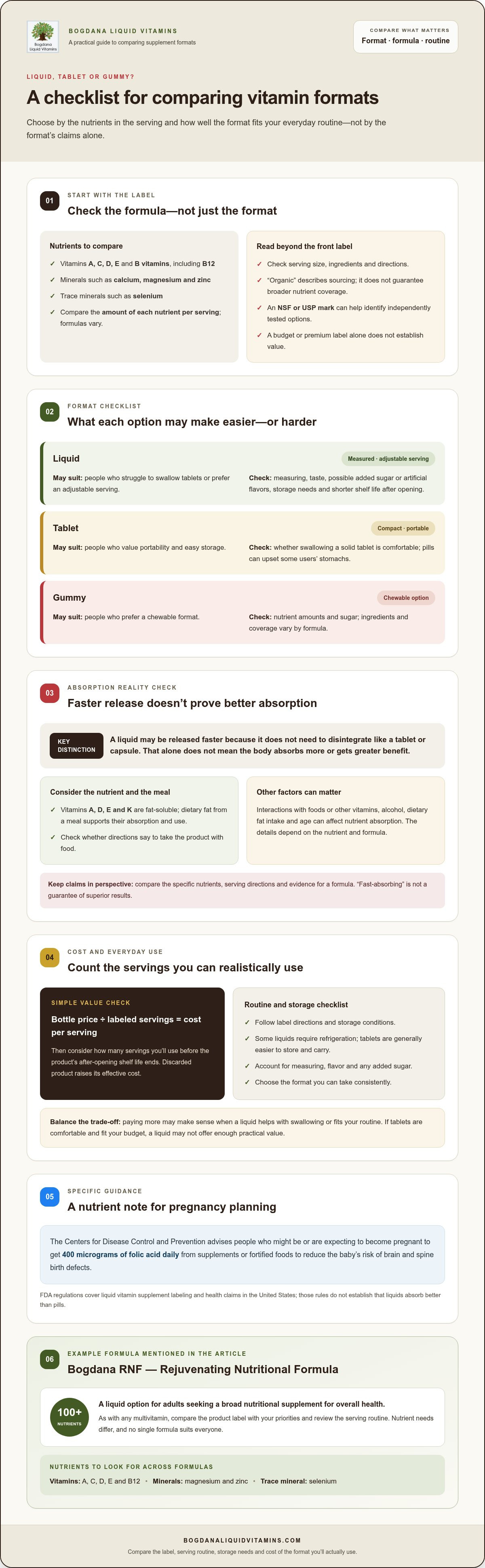
Whether liquid vitamins are worth the cost depends on the formula, serving size, and how well the format fits your routine. Liquid, tablet, and gummy multivitamins can cover overlapping needs, but compare each product’s label and directions rather than assuming one format suits everyone.
Ingredient Lists and Nutrient Coverage
A liquid formula may combine vitamins A, C, D, E, and B vitamins with minerals such as calcium, magnesium, and zinc, plus trace minerals such as selenium. Tablets can provide similar nutrients in compact form, while gummy ingredients and amounts vary by formula. Compare nutrient amounts, not just formats. “Organic” describes sourcing, not a guarantee of broader nutrient coverage.
Benefits and Uses of Liquid Multivitamins
Liquid multivitamins may suit adults who struggle to swallow tablets or prefer an adjustable serving. Specialty formulas can focus on age or life stage; gummies offer a chewable option, while tablets are easy to carry. The Centers for Disease Control and Prevention advises that people who might be or are expecting to become pregnant get 400 micrograms of folic acid daily from supplements or fortified foods to reduce the baby’s risk of brain and spine birth defects.
Estimate cost per day by dividing the bottle price by its labeled servings. For independently tested options, look for an NSF or USP mark, then compare nutrients per serving. A budget or premium label alone doesn’t establish value; price also reflects the formula and serving size.
Compare labeled nutrient amounts, serving convenience, and the cost of each serving you’ll actually take.
Liquid vitamin absorption and bioavailability
Liquid supplements may require less breakdown during digestion than pills. For nutrients such as vitamins A, D, E, and K, the meal matters too.
In the United States, the FDA enforces regulations covering liquid vitamin supplement labeling and health claims. Those rules don’t establish that liquids absorb better than pills.
Liquid and Pill Absorbability Claims
A liquid may be released faster because it doesn’t need to disintegrate like a tablet or capsule. But faster release doesn’t prove better absorption or greater benefit. Consider claims by comparing liquids, pills, and gummies alongside the specific nutrients, serving instructions, and evidence for the formula. Compare nutrient amounts on labels rather than treating “fast-absorbing” as a guarantee of superior results.
Factors Affecting Nutrient Absorption
Absorption depends on more than whether a supplement is liquid. Vitamins A, D, E, and K are fat-soluble, so dietary fat from a meal supports their absorption and use. Interactions with foods or other vitamins, alcohol, dietary fat intake, and age can also affect how nutrients are absorbed. For example, consider whether a product’s directions say to consume it with food, especially if it contains fat-soluble vitamins. These factors apply across formats, though the details depend on the nutrient and formula.
Convenience can still matter: a measured liquid serving may be easier to take than a pill, while gummies offer a chewable option. Follow the label’s serving directions, and compare ingredients and amounts in the liquid vitamin options before choosing a formula.
Liquid vitamin drawbacks, including cost and shelf life
Liquid supplements can cost more than pills, so the listed price isn’t the whole comparison. Check how many labeled servings you’ll use before the product’s after-opening shelf life ends. If you discard part of a bottle, its effective cost rises, even when the label lists ample servings.
Storage can affect convenience and waste. Some liquid vitamins require refrigeration, while tablets are generally easier to store and carry. Follow the product label recomendations after opening and keep the bottle under the stated storage conditions. A liquid that’s inconvenient to refrigerate or measure may be harder to use consistently than tablets.
Taste is another practical trade-off. Some liquids contain added sugar or artificial flavors, and a strong or unusual flavor can make daily use less appealing. Check the ingredients, especially when comparing formulas with vitamins and minerals such as vitamin C, vitamin D, and zinc marketed for immune support.
Form matters for comfort, too. Tablets may be difficult to swallow for some people, and pills can upset some users’ stomachs. Liquids avoid swallowing a solid tablet, but require careful measuring and may still have a flavor you dislike. Gummies are chewable, though their ingredients and nutrient amounts differ by formula.
For a fair comparison, weigh what each serving provides against storage needs, taste, and likely waste. Paying extra may make sense when the liquid format addresses a swallowing or routine challenge. If tablets are comfortable and fit your budget, a liquid may not offer enough practical value.
Bogdana Liquid Vitamins: Bogdana RNF - Rejuvenating Nutritional Formula
Bogdana RNF - Rejuvenating Nutritional Formula is a liquid option for adults seeking a broad nutritional supplement for overall health. It contains over 100 nutrients. If you prefer a single formula rather than swallowing tablets, this may be a format to consider as you compare options and serving routines.
As you review any multivitamin, look for nutrients relevant to your needs, such as vitamins A, C, D, E, and B12; minerals like magnesium and zinc; and trace minerals such as selenium. Nutrient needs differ, so compare the product label with your priorities instead of assuming one formula suits everyone. Bogdana Liquid Vitamins for Adults and Seniors and Bogdana Liquid Vitamins for Women and Men offer additional ways to explore liquid multivitamins by audience.
Visit Bogdana Liquid Vitamins online to learn more about Bogdana RNF.
Choose a Format You Can Keep Using
Let your routine guide the next step. The question of whether liquid vitamins are worth the cost in 2026 comes down to whether the format and formula suit your needs, not whether liquid is automatically superior. Think about the nutrients you’re seeking, such as vitamin D, magnesium, zinc, or trace minerals, and compare them with your usual diet and supplement routine. If you’re looking for a broad liquid option, Bogdana RNF is presented as One Product for Overall Health. Choose thoughtfully, and follow the product’s serving directions.
A practical choice fits your daily life and supports a steady, informed approach to wellness.
Frequently Asked Questions
Are Liquid Multivitamins More Effective Than Traditional Methods?
Not necessarily. Effectiveness depends on the nutrients, amounts, and whether the form fits your routine. Research comparing supplement forms hasn’t established that liquids are absorbed better overall. A liquid might be more practical for someone who avoids tablets, while another adult may reliably take a tablet. Compare the formula and serving directions, not just the format.
Can you mix a liquid multivitamin with juice, water, or a smoothie?
Follow the product label before mixing a serving into a drink. If the directions allow mixing, measure the serving and consume the full mixture so you don’t leave nutrients behind in the glass or blender. Juice or a smoothie can change the taste, while water may dilute it. Don’t combine the supplement with a hot drink unless the directions allow it.
What advantages do liquid multivitamins have over other forms?
Liquids can be useful when swallowing a solid supplement is difficult or when a measured serving fits your routine. Someone who eats breakfast at home, for example, might find a liquid easier to incorporate than carrying tablets. The trade-off is that liquids need careful measurement and may have a taste some people dislike. Gummies offer another chewable option.
Which Is Better for Adults?
There isn’t one best format for every adult. Consider swallowing comfort, usual meals, nutrient needs, and which serving instructions you can follow consistently. An older adult managing several daily routines may value a simple serving method, while another person may prefer tablets for portability. If you have a health condition or take other supplements, discuss your routine with a healthcare provider.
How much do liquid vitamins cost compared with tablets, capsules, and gummies in 2026?
Liquid supplements can cost more than pill counterparts, but the comparison depends on the formula and servings per container. Whether liquid vitamins are worth the cost in 2026 is easier to judge by comparing cost per labeled serving, then considering whether you’ll finish the bottle as directed. A lower bottle price may not mean better value if servings differ or the product is unused.


Comments