


Liquid Vitamins for Women Over 60: Nutrients and Benefits

Updated: 2 days ago
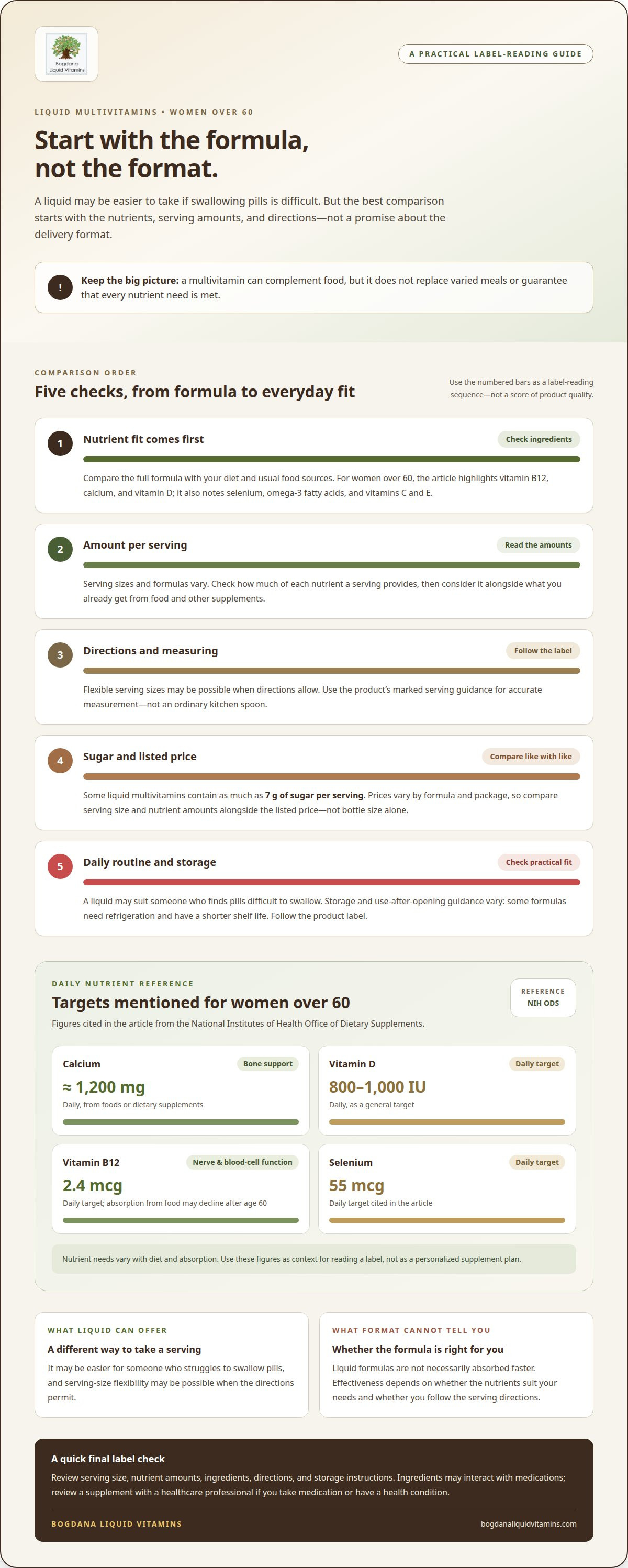
Does a multivitamin make it easier to take consistently? Liquid vitamins for women over 60 provide vitamins and minerals in a liquid form, which may suit people who find swallowing pills difficult and can allow flexible dosing. Nutrient needs also shift with age: dietary vitamin B12 absorption often declines after age 60, while the National Institutes of Health Office of Dietary Supplements says women over 60 should aim for approximately 1,200 mg of calcium daily from foods or dietary supplements.
It makes sense to look for support that fits your routine, but a multivitamin isn’t a substitute for a varied diet or a guarantee that every nutrient need is met. According to the National Institutes of Health Office of Dietary Supplements, women over 60 should generally aim for 800-1,000 IU of vitamin D daily. This article explains what liquid multivitamins are. How the need for different nutrients changes with age, such as vitamin B12, vitamin D, omega-3 fatty acids, and vitamins C and E, and what benefits and practical considerations liquid formulas may offer.
Table of Contents
Nutrient needs across women's life stages
Nutrient needs shift with age, diet, and the body's ability to absorb nutrients. After age 60, reduced stomach acid can make dietary vitamin B12 harder to absorb. According to the National Institutes of Health Office of Dietary Supplements, the recommended daily vitamin B12 target is 2.4 mcg. Vitamin B12 supports normal nerve function and red blood cell production.
Bone-supporting nutrients also matter. Women over 60 should aim for approximately 1,200 mg of calcium daily from foods or dietary supplements, according to the National Institutes of Health Office of Dietary Supplements. Women over 60 should generally aim for 800-1,000 IU of vitamin D daily, according to the National Institutes of Health Office of Dietary Supplements. The daily selenium target is 55 mcg, according to the National Institutes of Health Office of Dietary Supplements.
A multivitamin may not meet every nutrient need, and formulas vary. Compare the label with your usual food sources, including calcium-rich foods, and consider your diet as a whole. A supplement can add nutrients, but it does not replace varied meals or a balanced diet.
Popular liquid multivitamins vary in price by formula and package. Compare serving size and nutrient amounts alongside the listed price, rather than judging by bottle size alone.
Too much of a vitamin or mineral can be toxic, and an overdose may cause abdominal pain, nausea, vomiting, dizziness, itching, or a rash. If these symptoms follow a suspected overdose, contact Poison Control immediately. Keep liquid supplements secured, especially iron-containing products, which can cause fatal poisoning in children under 6 if accidentally overdosed.
What Are Liquid Vitamins?
Liquid vitamins are dietary supplements in a pourable form that contain vitamins, minerals, or both. They’re measured by serving size instead of the number of tablets or capsules. Formulas and serving sizes vary, so check the label to see which nutrients are included and how much each serving provides.
For someone who struggles to swallow pills, a liquid can be easier to take. It can also allow flexible serving sizes when the directions permit measurement. Use the product’s marked serving guidance, not an ordinary kitchen spoon, to measure accurately. A liquid still needs to be swallowed safely, so difficulty swallowing food or drinks deserves medical attention.
Women over 40 may consider supplements as diets and nutrient needs change, but age alone doesn’t identify a gap. Start with eating patterns: someone avoiding dairy, for example, may need to pay closer attention to calcium sources. A multivitamin can contain vitamins and minerals, and trace minerals such as selenium and zinc in some formulas. Match the ingredient list to dietary needs, rather than assuming every product is complete.
Start with a readable label. Review the serving size, nutrient amounts, ingredient list, and directions. The word “natural” alone does not establish a formula’s purity or suitability. Ingredients may interact with medications, so review the product with a healthcare professional, especially if you take medication or have a health condition.
Storage and use-after-opening guidance vary by formula. Some liquid vitamins need refrigeration and have a shorter shelf life than other supplement forms. Follow the product label for storage and discard timing after opening; don’t assume all bottles last equally long. If you’re comparing formats, explore these liquid vitamin options with the ingredients and directions in mind.
What Are the Benefits of Liquid Multivitamins?
Liquid multivitamins offer another way to take a nutrient formula, especially when pills are difficult to swallow. Their usefulness depends on the ingredients, servings, and directions, not the format alone. A good comparison starts with what each formula actually provides.
Effectiveness Compared With Other Multivitamins
Liquid formulas are not necessarily absorbed faster than other supplement forms, and faster absorption doesn’t automatically mean better results. Effectiveness depends on whether the nutrients suit your needs and whether you follow the serving directions. Absorption varies by nutrient and formulation, so delivery format alone can’t determine which multivitamin is right. For liquid vitamins for women over 60, compare the full formula rather than relying on format claims.
Formulas for Older Adults
Formulas for older adults are designed with age-related nutrient needs in mind, but ingredients and amounts vary. Compare the label with your diet, especially for nutrients such as omega-3 fatty acids and vitamins C and E. Check whether each nutrient is present and how much a serving supplies. This makes it easier to assess whether a formula complements your usual intake.
For liquid vitamins for women over 60, also consider how the directions fit your day. A morning dose may be convenient if it matches the label instructions and your routine. Some liquid multivitamins contain as much as 7 g of sugar per serving, so include sugar content when comparing formulas.
Bogdana Liquid Vitamins: One Product for Overall Health
Bogdana Liquid Vitamins offers an overall-health option for adults seeking liquid nutritional support. Women over 60 may consider Bogdana Liquid Vitamins for adults. These offerings provide a way to explore broad nutrient support in liquid form.
Bogdana RNF - Rejuvenating Nutritional Formula contains over 100 nutrients. Its broad formula may interest people looking for an all-in-one approach to everyday wellness. Review the product’s ingredient information alongside your diet and the nutrients you’re already getting, especially calcium, vitamin D, and vitamin B12. A multivitamin can complement food, but it doesn’t replace a varied diet or determine your individual needs.
Learn more about these liquid vitamin options, by contacting Bogdana Liquid Vitamins.
Choose a Routine That Supports Your Next Chapter
Get a clearer picture of your everyday nutrition. Liquid vitamins for women over 60: consider how a formula fits your meals, preferences, and existing supplement routine. A simple record of what you eat and take can help you spot questions and avoid casually layering products with overlapping ingredients.
Before adding a formula, identify what you want it to support, such as normal energy metabolism or bone health. Then compare its ingredient list and serving directions with that goal. If your diet or routine changes, do not assume the same product will always be the right fit. Thoughtful choices can make wellness feel practical and personal.
Small, informed decisions can help you move forward with confidence and care.
Frequently Asked Questions
What vitamins and minerals do women over 60 commonly need?
Common nutrients to review include calcium, vitamin D, vitamin B12, magnesium, and omega-3 fatty acids. Needs may vary depending on food choices, existing supplements, and individual circumstances. For example, someone who rarely eats fish may want to consider omega-3 sources, while someone avoiding dairy can review calcium-rich foods. Use a supplement label to see what it adds to your usual intake.
Are liquid vitamins absorbed better than tablets for older adults?
Not necessarily. A liquid format may be easier for someone who has trouble swallowing tablets, but that does not mean every nutrient is better absorbed. Absorption depends on the nutrient and formula. Consider whether you can take the product comfortably and consistently, then compare its ingredients and serving directions with your needs.
Which nutrients should women over 60 avoid taking in excess, such as iron or vitamin A?
Avoid taking more than directed or stacking products without reviewing their combined ingredients. A multivitamin plus a separate iron or vitamin A supplement can increase total intake. Excess amounts of vitamins or minerals can be toxic. Keep products in their original containers and seek immediate poison-control help if overdose symptoms such as vomiting or dizziness occur.
How can you check the quality and safety of liquid vitamin supplements in the US?
Read the Supplement Facts panel, ingredient list, serving directions, storage instructions, and expiration information. Check that the container is sealed and the label clearly identifies its contents. Consult a healthcare professional before starting a supplement, especially if you have a health condition or take medication.
What are the best liquid multivitamins for women over 60 in the US?
The article does not identify one best formula. Bogdana Liquid Vitamins was created for overall health and contains 100 nutrients, with options to compare by their ingredients, serving amounts, and directions.


