


Multivitamin for seniors with low appetite and nutrient needs

Low appetite doesn’t erase nutrient needs. A multivitamin for seniors with low appetite may help fill some nutrient gaps when smaller meals make a varied diet difficult, but food choices and individual needs still matter.
It’s understandable to wonder whether less food means fewer vitamins and minerals are needed. Energy needs may decline with age while vitamin and mineral needs remain similar. According to the National Institutes of Health Office of Dietary Supplements, adults ages 71 and older need 800 IU of vitamin D each day and 1,200 mg of calcium each day.
This guide explains how smaller, nutrient-rich meals and supplements can help support intake, what to consider for bones and joints, and how to compare a multivitamin label with recommended amounts. You’ll also learn why a supplement should complement meals, not replace them, and why it’s helpful to consider medications and existing nutrient sources when choosing one.
Table of Contents
1. How can I get the vitamins and minerals I need?
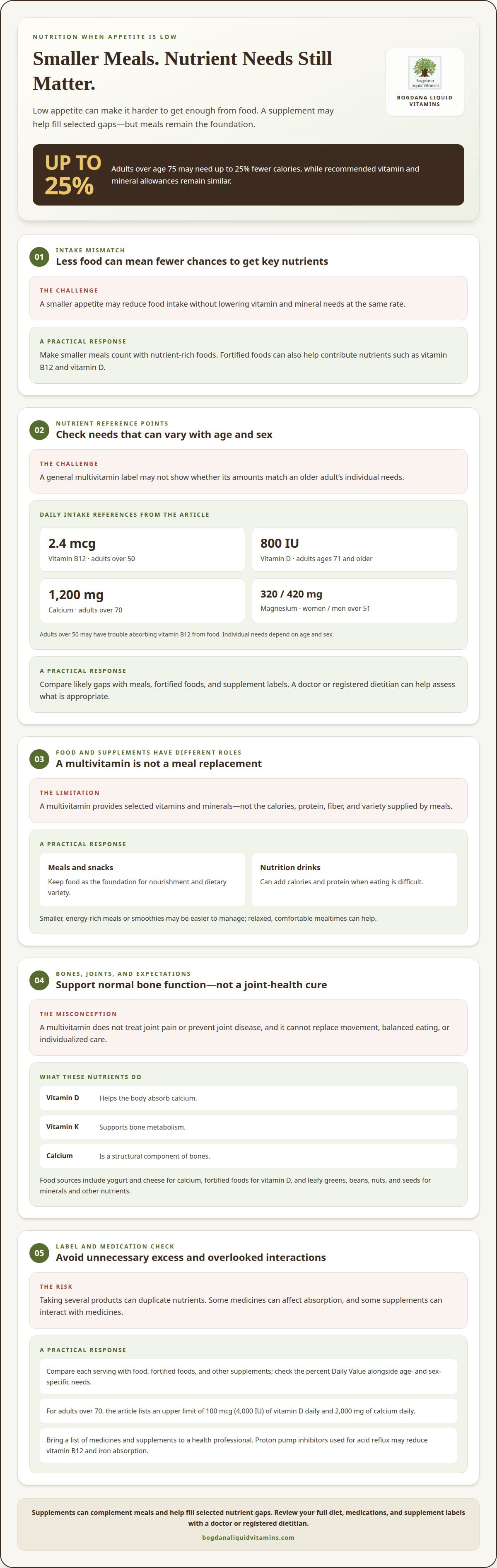
A low appetite can reduce food intake without lowering vitamin and mineral needs at the same rate. Adults over age 75 may need up to 25% fewer calories, while recommended nutrient allowances remain similar. A multivitamin for seniors with low appetite may help fill gaps, but it cannot replace nourishment from meals.
Needs vary by age and sex. Adults over 50 need 2.4 mcg of vitamin B12 each day. Women over 51 need 320 mg of magnesium daily, while men over 51 need 420 mg daily. For adults ages 71 and older, the National Institutes of Health, Office of Dietary Supplements, gives 800 IU of vitamin D each day. The same office says adults over age 70 need 1,200 mg of calcium each day.
Vitamin B12 deserves attention because adults over 50 may have trouble absorbing it from food. Fortified foods or supplements can help address that gap. A varied diet also supplies nutrients such as potassium, which supports normal bodily functions, including healthy blood pressure regulation.
Food provides calories, protein, fiber, and a range of nutrients. When eating is difficult, nutrition drinks can add nourishment, while multivitamins provide selected vitamins and minerals, not the calories or protein of a meal. Try smaller, energy-rich meals or smoothies, and make mealtimes relaxed and comfortable.
More isn’t always better. For adults over age 70, the National Institutes of Health, Office of Dietary Supplements, says vitamin D intake should not exceed 100 mcg (4,000 IU) each day. Compare supplement labels with food intake, and avoid stacking products that contain the same nutrients.
2. Do senior multivitamins support bone and joint health?
A multivitamin may provide nutrients involved in normal bone function. Vitamin D helps the body absorb calcium, vitamin K supports bone metabolism, and calcium is a structural component of bones. These nutrients support bone health, but a multivitamin does not treat joint pain or prevent joint disease. Supplements do not replace movement, balanced eating, or individualized care.
Food remains a useful foundation. Yogurt and cheese provide calcium, while fortified foods can provide vitamin D. Leafy greens, beans, nuts, and seeds offer minerals and other nutrients. A supplement may help fill gaps when low appetite or limited food choices make it difficult to get enough nutrients. It does not provide the calories, protein, and variety of meals.
To identify gaps, a doctor or registered dietitian can review usual meals, health history, and medications. Bring a list of supplements and medicines, including nonprescription products. Certain medications can affect nutrient absorption, and some supplements can interact with medicines. For example, proton pump inhibitors used for acid reflux may reduce vitamin B12 and iron absorption. A health professional can weigh these factors and help determine suitable nutrients and amounts.
A multivitamin may help seniors with low appetite fill certain micronutrient gaps, but it cannot prevent malnutrition on its own. Nutrition drinks can provide calories and protein, while supplements focus on listed vitamins and minerals. U.S. prices vary with product format, package size, and nutrient contents, so compare labels and serving information rather than assuming all formulas cost the same.

3. Choosing a multivitamin based on recommended intake
Compare the vitamins and minerals in each serving with what you get from meals and fortified foods. A label’s percent Daily Value is a useful reference, but it may not reflect an older adult’s age- and sex-specific needs. Look for amounts that help meet recommended intake rather than choosing high doses across the board.
Check the nutrients most relevant to the person’s diet. For example, men over 50 need 900 mcg of vitamin A each day, while women over 50 need 700 mcg. A multivitamin may not reliably correct a specific deficiency because formulas don’t have one standard nutrient list. Match label amounts to likely gaps and discuss concerns with a health professional.
Look at upper limits as well as recommended amounts. The maximum daily dose of vitamin A is 3,000 mcg, and the recommended maximum amount of vitamin B6 is 100 mg daily. The recommended limit for folate is 1,000 mcg per day. Regularly taking supplements that provide more than 45 mg of iron daily can exceed the listed limit. Taking more than 40 mg of zinc daily can cause side effects.
Count nutrients from every source, including separate supplements and fortified foods. For adults over age 70, the upper limit for calcium is 2,000 mg each day. Too much of some vitamins and minerals can be harmful, so avoid megadoses. If kidney health, medications, or existing nutrient levels affect the choice, discuss the full label with a doctor or registered dietitian.
Bogdana Liquid Vitamins: Bogdana Liquid Vitamins for Adults and Seniors
Bogdana Liquid Vitamins for Adults and Seniors offers a liquid supplement for adults seeking to support their overall nutrient intake. Its liquid format may suit people who find pills difficult to swallow. The formula complements food, which remains important for calories, protein, and dietary variety.
Bogdana RNF - Rejuvenating Nutritional Formula designed for overall health contains over 100 nutrients. Vitamins and minerals support normal bodily functions as part of a balanced approach to nutrition. For older adults with low appetite, it may complement meals, rather than replace food or address a specific deficiency on its own.
Review the product’s nutrient information alongside your usual diet, other supplements, and medications. Before starting any supplement, consult a healthcare professional, especially if you have a health condition or take medication. Bogdana RNF is a liquid multivitamin option for adults and seniors who have difficulty swallowing pills.
Make your next nutrition step manageable
A sustainable routine starts with choices that fit your appetite, preferences, and daily habits. When considering a multivitamin for seniors with low appetite, use nutrient information to guide a conversation with a healthcare professional, especially if you take medication or other supplements.
Consider Bogdana Liquid Vitamins for Overall Health for Adults and Seniors, which offer liquid options. Bogdana RNF - Rejuvenating Nutritional Formula contains over 100 nutrients. Compare product information with personal needs, and keep meals central to a nourishing routine.
Small, thoughtful steps can make everyday nourishment feel more manageable.
Frequently Asked Questions
How can I get the vitamins and minerals I need?
Build meals around foods that provide several nutrients in a manageable portion. For example, yogurt with fortified cereal can contribute calcium and other nutrients, while eggs or fortified foods can help provide vitamin B12. If chewing, swallowing, or meal preparation makes eating harder, discuss practical food options with a healthcare professional. Keeping a simple food record can help reveal patterns to discuss.
Should I take a multivitamin or supplement?
A multivitamin for seniors with low appetite may help cover dietary gaps, but it isn’t right for everyone. If a healthcare professional identifies a specific shortfall, a single-nutrient supplement may be more suitable than a broad formula. Before starting any supplement, review your diet, health conditions, and medications with a healthcare professional. A multivitamin should complement a balanced diet, not replace it.
Can medications affect vitamin absorption?
Yes. Proton pump inhibitors used for acid reflux can reduce absorption of vitamin B12 and iron. Medication effects depend on the drug and a person’s overall routine, so share a current medication and supplement list with a doctor or pharmacist. Don’t change a prescribed medicine or separate doses without professional guidance. A pharmacist can help assess possible interactions and appropriate timing.
Do senior multivitamins support bone and joint health?
Some formulas include nutrients involved in normal bone function, but a multivitamin isn’t a joint treatment. Vitamin D and calcium contribute to bone health, and formulas may also include vitamin K to support bone metabolism. Check whether the nutrients suit your needs and total intake. Ongoing joint discomfort or changes in mobility call for medical assessment, not simply adding more supplements.
How should I take senior multivitamins to ensure optimal absorption?
Follow the product label’s serving directions, and don’t double a dose if you forget one. Several products may contain overlapping nutrients, so note their contents and review them with a healthcare professional. If swallowing tablets is difficult, a liquid format may be easier for some people. Consult a healthcare professional about your medicines before starting a supplement.


