Multivitamin Without Artificial Sweeteners for Dietary Needs

A clean label matters, but it doesn’t tell you whether a formula suits your needs. A multivitamin combines vitamins and may also include minerals. Choosing a multivitamin without artificial sweeteners means looking beyond the front label to understand what’s inside and how the ingredients fit your diet.
If you’re avoiding certain additives, allergens, or ingredients that don’t suit your dietary preferences, supplement labels can take time to compare. A multivitamin without artificial sweeteners may meet one preference, but you’ll still want to check its full ingredient list and nutrient panel. This guide explains how to assess ingredients and sourcing, identify potential allergens, and evaluate dietary compatibility. It also shows why a no-sweetener claim alone doesn’t tell you whether a formula suits your needs.
Table of Contents
Natural ingredients and organic sourcing
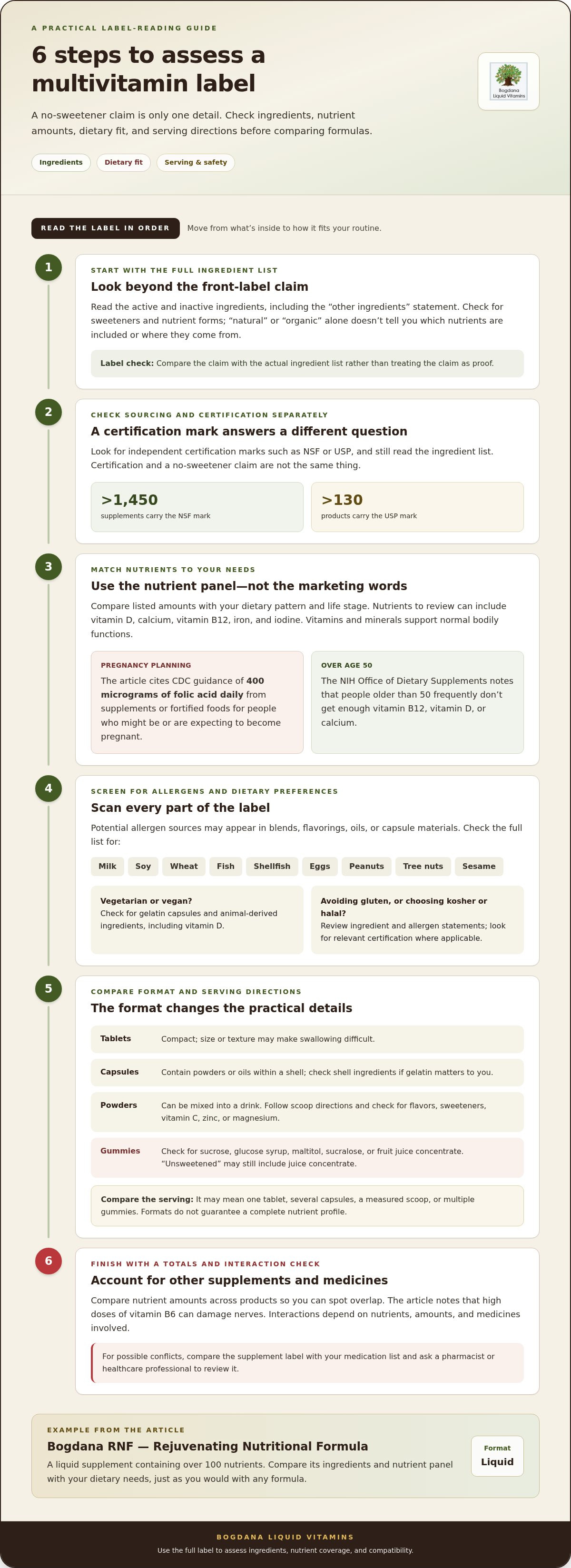
A “natural” claim doesn’t tell you which vitamins a formula contains or where its ingredients come from. Read the full ingredient list, including inactive ingredients, to spot sweeteners and understand the nutrient forms. For example, compare a front-label claim with the listed ingredients rather than treating the claim as proof. Organic sourcing describes ingredient choices, but it doesn’t establish that a multivitamin provides the nutrients you need. Check the nutrient panel for specific vitamins and minerals, such as vitamin D, calcium, or vitamin B12.
Are multivitamins without artificial sweeteners third-party tested? Not automatically. Look for independent certification marks, such as NSF or USP, and read the ingredient list separately. More than 1,450 supplements carry the NSF mark, and more than 130 products carry the USP mark. A certification mark and a no-sweetener claim address different questions, so use both the label and the mark when comparing brands.
What are the risks of taking a multivitamin, including interactions and excessive nutrient intake? Taking overlapping products can raise your total intake, and high doses of vitamin B6 can damage nerves. Interactions depend on the nutrients, amounts, and medicines involved, so compare the supplement label with your medication list and ask a pharmacist or healthcare professional to review potential conflicts.
Life stage can shape which nutrients deserve attention. According to Centers for Disease Control and Prevention, people who might be or are expecting to become pregnant should get 400 micrograms of folic acid daily from supplements or fortified foods to reduce the baby’s risk of brain and spine birth defects. According to National Institutes of Health Office of Dietary Supplements, people older than 50 years frequently don’t get enough vitamin B12, vitamin D, or calcium.
Before choosing, check the full ingredient list for sweeteners, compare the nutrient amounts with those in your other supplements, and consider whether the listed nutrients fit your dietary needs. Ingredient sourcing is one part of the decision, alongside nutrient coverage and compatibility.
Allergen and dietary compatibility
Start with the complete ingredients list, not just claims on the front of the label. Look for allergen sources such as milk, soy, wheat, fish, shellfish, eggs, peanuts, tree nuts, or sesame. These may appear in nutrient blends, flavorings, oils, or capsule materials. If you avoid a particular ingredient, scan the entire label, including the “other ingredients” statement.
Dietary preferences also affect whether a product is suitable for you. Vegetarians may avoid gelatin capsules, while vegans may also avoid animal-derived vitamin D and other ingredients. If you avoid gluten, review the ingredient and allergen statements rather than assuming that “natural” means gluten-free. For kosher or halal preferences, look for relevant certification on the packaging.
How to choose a multivitamin based on age, sex, diet, and health needs? Compare the nutrient panel with your dietary pattern and life stage, then review nutrients such as iron, calcium, vitamin D, iodine, and vitamin B12. Check existing supplements and medicines with a pharmacist to identify overlapping nutrients or potential interactions.
Choose formulas that state nutrient amounts clearly, and avoid taking multiple supplements with the same nutrients unless advised. People who eat little or no animal food can pay particular attention to how a formula addresses nutrients commonly found in animal-based foods, such as vitamin B12. Those with restricted diets can use the ingredient list to rule out unsuitable sources before comparing nutrient coverage.
What are the differences between unsweetened tablets, capsules, powders, and gummies?
Each multivitamin format has different practical features, but none guarantees a complete nutrient profile. Tablets are compact and list nutrients per serving, but their size or texture may make swallowing difficult. Capsules contain powders or oils within a shell. Check the shell ingredients if gelatin or another source matters to you.
Powders can be mixed into water or another drink, which may suit people who prefer not to swallow tablets. Follow the scoop and serving directions on the label, since an inaccurate measure can change the amount you take. Check the ingredient list for flavors, sweeteners, and nutrients such as vitamin C, zinc, or magnesium.
Gummies are chewable, but their taste may come from added sweeteners. Check for sucrose, glucose syrup, maltitol, sucralose, or fruit juice concentrate, which adds sugars. A gummy labeled “unsweetened” may still contain juice concentrate, so review the full ingredients instead of relying on the front label. Compare its nutrient panel with your needs, too.
Compare serving directions, nutrient amounts, and ingredients across formats before choosing. Note whether a serving means one tablet, several capsules, a measured scoop, or multiple gummies. Then check for artificial sweeteners and make sure the flavoring and other ingredients suit your preferences. A useful choice is one you can take as directed and assess against your dietary needs.
Bogdana Liquid Vitamins: Bogdana RNF - Rejuvenating Nutritional Formula
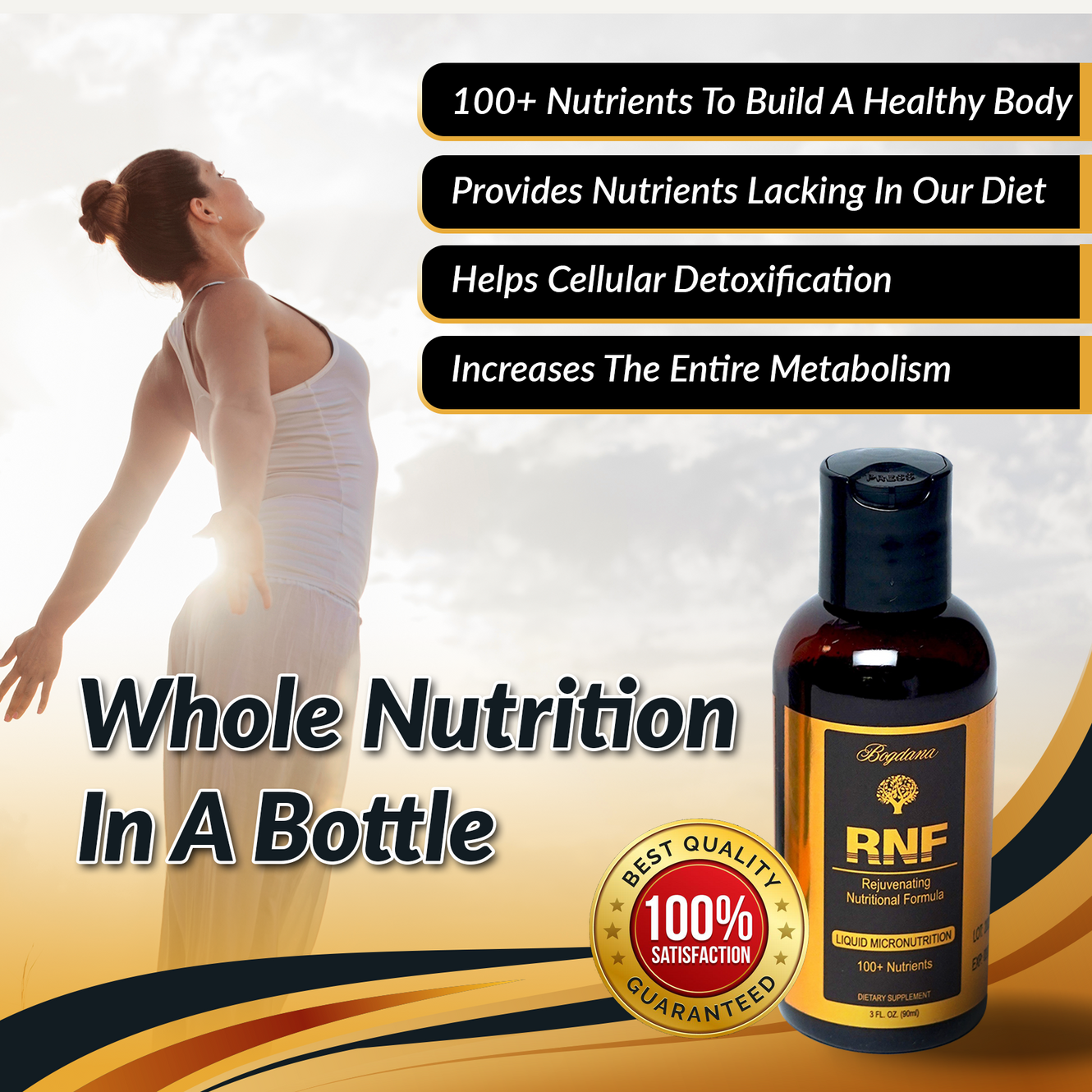
Bogdana RNF - Rejuvenating Nutritional Formula is a liquid supplement designed to support overall health. It contains over 100 nutrients, offering an option for adults who prefer a broad formula in liquid form. Vitamins and minerals that support normal bodily functions are suspended in the base of honey, which is a natural sweetener with many health benefits. But the right fit still depends on your dietary needs and the product’s ingredients.
Consider it if you want a comprehensive liquid supplement rather than separate nutrient products. Bogdana Liquid Vitamins for Adults and Seniors and Bogdana Liquid Vitamins for Women and Men are also options within the range. Compare any formula’s ingredient list with your sweetener preferences, allergen needs, and existing supplements. For example, review nutrients such as vitamin D, vitamin B12, and calcium in relation to your overall intake, without assuming every formula contains the same amounts.
Choose a Formula That Fits Your Routine
Choose a product that fits your routine as well as your ingredient preferences. Finding a multivitamin without artificial sweeteners means matching the label to your priorities, not relying on the most persuasive front-label claim. Keep a short list of ingredients you avoid and nutrients you want to support, then compare products alongside your usual diet and supplements. If a broad liquid option suits your routine, Bogdana Liquid Vitamins offers One Product for Overall Health. Explore the formula to see whether its approach fits your wellness priorities, while keeping your dietary needs in mind.
Small, informed choices can help you build a wellness routine that feels right for you.
Frequently Asked Questions
What Is A Multivitamin?
A multivitamin combines several vitamins, often with minerals, in one formula. Its nutrient panel lists the specific nutrients and amounts, which vary between products. Use that panel to compare formulas with your dietary pattern and existing supplements. Supplements can complement food choices, but they are not a substitute for food or a balanced diet.
What multivitamins in the U.S. contain no artificial sweeteners?
Some liquid multivitamin formulas are made without artificial sweeteners. For any product sold in the United States, evaluate its own ingredient list rather than relying on a brand name or front-label claim. Formulas can differ by product and format, so inspect the label for sweeteners, flavoring ingredients, and the nutrients provided per serving.
Which multivitamin brands use stevia, monk fruit, or no sweeteners instead?
Stevia and monk fruit are distinct sweeteners, and their presence should be shown in the product’s ingredient information. “No artificial sweeteners” doesn’t necessarily mean a formula contains no sweeteners; it may use another ingredient for taste. Look for the named ingredient on the label rather than assuming a brand uses stevia or monk fruit across its products.
How can I check a multivitamin label for artificial sweeteners?
Read the full ingredient list, including flavorings and ingredients listed after the nutrients. Look for names such as sucralose, then check for sugar alcohols like maltitol and syrups such as glucose syrup. Gummies may contain fruit juice concentrate, which adds sugars. Compare the ingredients with the front-label claim and your dietary preferences.
How safe are the ingredients used to sweeten multivitamins?
Products may use sucrose, glucose syrup, maltitol, sucralose, stevia, monk fruit, or fruit juice concentrate for sweetness. Sugar provides calories without nutrients, and sweeteners differ in their properties. No single answer applies to every ingredient, amount, or person. Read the label carefully, especially if you avoid a particular sweetener or have dietary concerns.