Signs You May Need a Multivitamin and How to Decide If One Fits

Feeling tired or noticing changes in your skin can make a multivitamin seem like the obvious next step, but symptoms alone can’t tell you whether you need one. Possible signs you need a multivitamin include fatigue, muscle weakness, skin changes, or difficulty concentrating, though these can have other causes. Your diet and ability to absorb nutrients matter, too.
It’s understandable to want a simple way to fill nutritional gaps. A multivitamin combines several vitamins and minerals, while a single-nutrient supplement provides one specific nutrient. Whether either is a good fit depends on what you eat, your nutritional needs, and factors that may affect absorption.
Learn how vitamins differ from multivitamins, which conditions and circumstances may affect nutrient absorption, and how to assess whether a supplement could suit your needs. You’ll also see why symptoms are a starting point for a closer look, not a diagnosis, and which nutrients support normal bodily functions.
Table of Contents
Vitamins versus multivitamins: What's the difference?
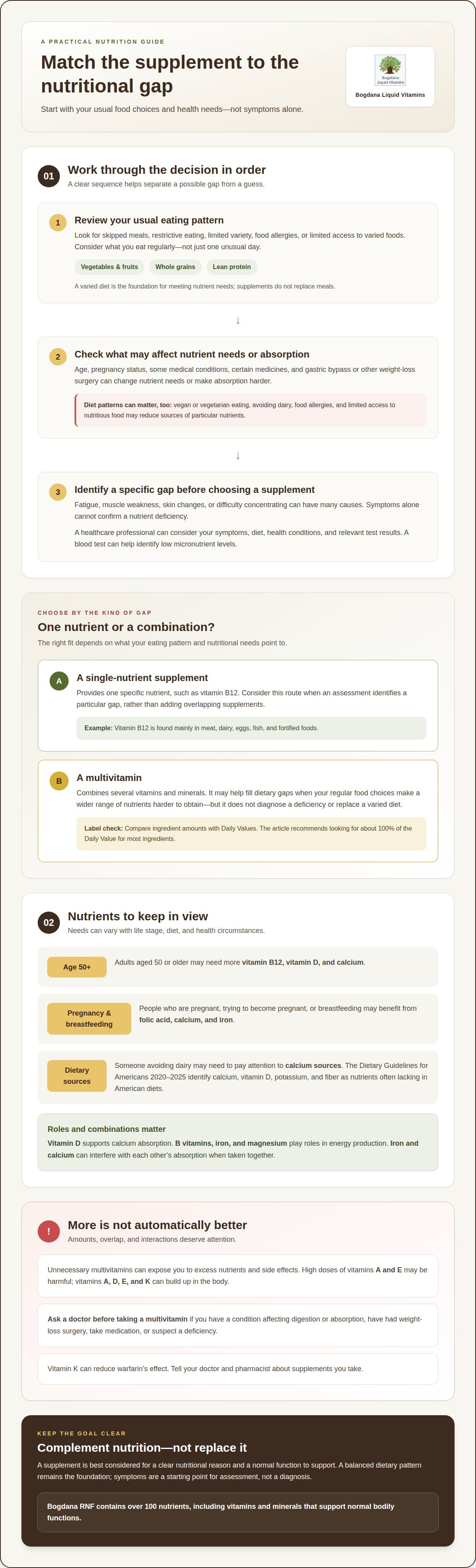
A multivitamin combines vitamins and minerals; an individual supplement supplies one nutrient, such as vitamin B12. Start by reviewing your usual meals: skipping meals, restrictive eating, or limited variety can leave nutritional gaps. A varied diet with fruits, vegetables, whole grains, and lean protein is the first step toward meeting nutrient needs. Vitamin B12 is found mainly in meat, dairy, eggs, and fish, as well as fortified foods.
Fatigue, muscle weakness, skin changes, or difficulty concentrating can occur with nutrient deficiencies, but they can also have other causes. Dry eyes or blurry vision alone don’t confirm low vitamin A; deficiency can cause night blindness. A blood test can help identify low micronutrient levels and assess the deficiency.
Needs can differ with age, sex, and pregnancy status. Adults aged 50 or older may need more vitamin B12, vitamin D, and calcium; people who are pregnant, trying to become pregnant, or breastfeeding may benefit from folic acid, calcium, and iron.
Unnecessary multivitamins can expose you to excess nutrients and side effects; the U.S. Preventive Services Task Force notes that excessive supplement doses can cause adverse effects. High doses of vitamins A and E may be harmful, and vitamins A, D, E, and K can build up in the body. Choose a multivitamin, compare its ingredient amounts with daily values, and look for about 100% of the daily value for most ingredients. Choose an individual nutrient when an assessment identifies a specific gap, rather than adding overlapping supplements.
Medical conditions that may affect nutrient absorption
Nutrient gaps can reflect more than food choices. Age-related changes, certain medical conditions, some medications, and gastric bypass or other weight-loss surgery can make nutrient absorption harder. Diseases that affect digestion can also change how much the body absorbs. After surgery, nutrient needs can differ, so a general multivitamin may not address every gap.
Diet matters, too. A vegan or vegetarian diet, food allergies, and limited access to nutritious food can reduce sources of nutrients. For example, someone avoiding dairy may need to pay attention to calcium sources, while a varied diet of vegetables, fruits, grains, and protein can provide a wider range of nutrients. A multivitamin may help fill dietary gaps, but it doesn’t replace food or diagnose a deficiency.
B vitamins, iron, and magnesium play a role in energy production, so low intake may contribute to fatigue. Iron and calcium can interfere with each other’s absorption when taken together. Supplement amounts and combinations matter, especially after surgery or when taking medicines.
Ask a doctor before taking a multivitamin if you have a condition that affects digestion or absorption, have had weight-loss surgery, take medication, or suspect a deficiency. For example, vitamin K can reduce warfarin’s effect, so tell your doctor and pharmacist about supplements. A blood test can help identify specific nutrient deficiencies. Multivitamins also aren’t a substitute for cancer prevention or treatment.
If a liquid format suits your routine, consider a dietary supplement alongside your broader nutrition needs. Explore liquid vitamin options.
Multivitamins as dietary supplements
A multivitamin is a dietary supplement, not a replacement for meals or a treatment for disease. About one-third of American adults take one regularly. Its practical role is to help cover possible nutrient gaps while a balanced diet remains the foundation. Whole grains, vegetables, fruits, and protein foods provide nutrients alongside fiber and other beneficial components.
Consider your regular eating pattern, not one unusual day. If food allergies, a vegan diet, or limited access to varied foods narrows your choices, certain nutrients may be harder to obtain. The Dietary Guidelines for Americans 2020-2025 identify calcium, vitamin D, potassium, and fiber as nutrients often lacking in American diets. A supplement’s ingredients and amounts should match a plausible gap, rather than add more nutrients to a routine.
Adults may also take multivitamins hoping to support memory or prevent chronic disease. These goals call for a careful distinction: evidence does not show that multivitamins reliably prevent heart disease or cancer. The U.S. Preventive Services Task Force states there’s no evidence to support or discourage multivitamins for preventing cardiovascular disease or cancer. A supplement also can’t establish whether symptoms reflect a deficiency. For a suspected deficiency, a doctor can assess symptoms, diet, health conditions, and relevant test results before recommending a nutrient.
Choose supplements for a clear nutritional reason and a normal function to support, such as vitamin D’s role in calcium absorption. The takeaway: use a multivitamin to complement a sound dietary pattern, not as insurance against every health concern.
Bogdana Liquid Vitamins
Bogdana Liquid Vitamins offers liquid formulas for adult women, men, and seniors as an option to consider when a supplement fits your nutrition routine. Bogdana RNF, the Rejuvenating Nutritional Formula, contains over 100 nutrients, including vitamins and minerals that support normal bodily functions.
Choosing a formula is a separate step from identifying a deficiency. If symptoms or a health condition raise concerns about nutrient levels, discuss assessment and testing with a healthcare professional. Then consider whether a broad liquid supplement fits your needs and dietary habits. Bogdana offers one product for Overall Health, for adult life stages.
For questions about Bogdana Liquid Vitamins and its formulas, contact Bogdana Liquid Vitamins.
Make Your Next Nutrition Choice With Confidence
Make your next step a clearer picture of your own routine. For several days, note what you eat, any supplements you already use, and changes in energy, focus, or appetite. Bring those details to a healthcare professional, especially if you’re considering nutrients such as vitamin B12, vitamin D, calcium, folate, or iron. That context can help distinguish a possible dietary gap from a symptom with another cause. Possible signs you need a multivitamin are cause for reflection, not a reason to add multiple products at once. Choose a supplement only when its role fits your needs, with the aim of supporting normal bodily functions alongside sustainable food habits. Small, informed decisions can make your wellness routine feel more intentional and easier to maintain.
Keep learning, pay attention to your needs, and take your next step with confidence.
Frequently Asked Questions
Do You Need To Take a Multivitamin?
No, a multivitamin isn’t necessary for every adult. The signs you need a multivitamin aren’t a diagnosis or an automatic reason to take one. Consider whether your usual eating pattern leaves recurring gaps, and include fortified foods and supplements in that review. This gives you a more useful starting point for deciding whether a broad formula fits your routine.
What Problems Can Vitamin Deficiency Cause?
A deficiency can interfere with the normal function supported by the nutrient that’s low. Effects depend on the nutrient and the individual situation, so a general symptom list can’t show what’s missing. If you suspect a deficiency, discuss your health history and test results with a healthcare professional who can help clarify whether dietary changes or supplementation are appropriate.
What are common signs of vitamin or mineral deficiencies?
There isn’t one specific symptom pattern that identifies a particular deficiency. Instead of relying on a checklist, note when a change began, whether it persists, and how it affects daily activities. Include recent changes to your eating routine or medicines. If you’re considering signs you need a multivitamin, this context can make a conversation with a healthcare professional more productive.
Can fatigue, hair loss, or brittle nails indicate a nutrient deficiency?
These changes can be associated with a nutrient shortfall, but they don’t establish its cause. Note whether they began around the same time or followed a change in your routine. If they continue or interfere with daily life, share that timeline and your current supplement list with a healthcare professional, rather than using symptoms alone to choose nutrients.
How can you tell if you need a multivitamin versus a specific supplement?
A specific supplement targets one nutrient, while a multivitamin combines several. The useful distinction is whether the need is narrow or involves multiple nutrients. Consider the whole picture, including fortified foods and products already in your routine, so your choice addresses a real gap rather than adding another source of the same nutrient.