How to Meet Your Mother’s Vitamin and Mineral Needs

The best vitamins for an elderly mother start with her age-specific nutrient needs, not a one-size-fits-all bottle. In the United States, women age 51 and older need 1,200 mg of calcium each day, and adults ages 71 and older need 20 mcg (800 IU) of vitamin D each day, according to the National Institutes of Health, Office of Dietary Supplements. These amounts offer a clear starting point for understanding what belongs in her daily nutrition plan.
It makes sense to want a simple way to support your mother’s health as her needs change. This guide explains how older adults can get essential nutrients, covers daily calcium and vitamin D needs, and outlines recommended amounts for key vitamins and minerals. You’ll also learn why food is usually the foundation, when supplements may help fill a gap, and how medications or health needs can affect supplement choices.
Table of Contents
1. How can I get the vitamins and minerals I need?
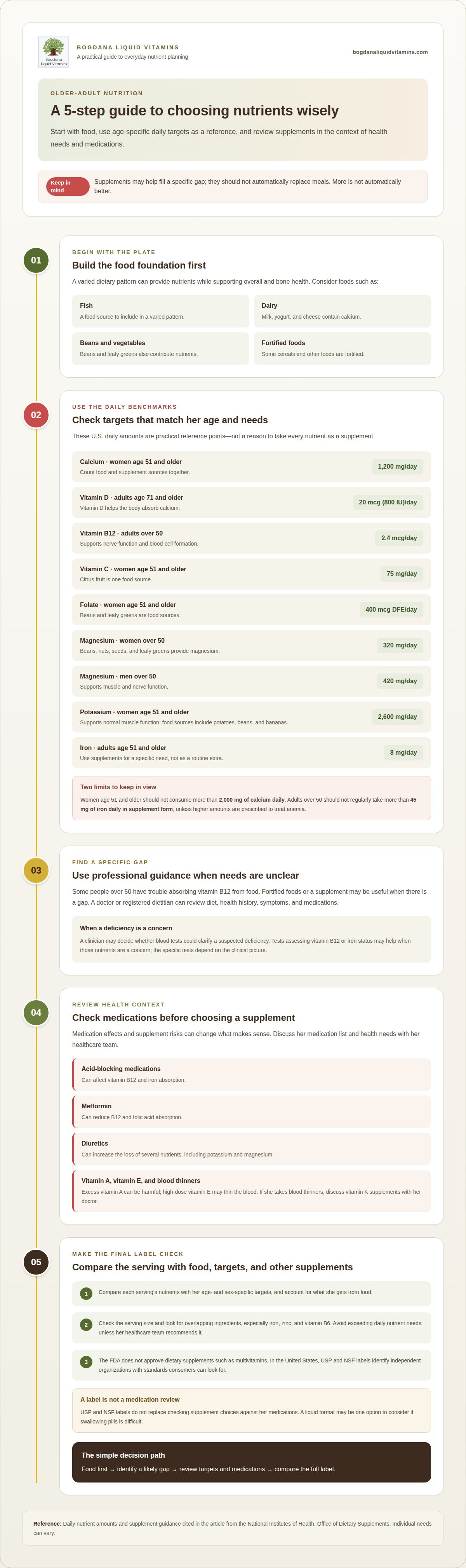
Start with food. A varied dietary pattern can provide nutrients through foods such as fish, dairy, beans, vegetables, and fortified cereals, while supporting overall health and bone health. Supplements can help fill a specific gap, but shouldn’t automatically replace meals. Some people over 50 have trouble absorbing vitamin B12 from food, so fortified foods or a supplement may be useful. A doctor or registered dietitian can help identify whether a nutrient gap is likely.
There’s no single U.S. price for senior multivitamins or individual vitamin supplements. Cost varies by product, ingredients, serving size, and retailer. Compare the label with her nutrition priorities rather than choosing by price alone.
A doctor can review an older woman’s diet, health history, symptoms, and medications, then decide whether blood tests could clarify a suspected deficiency. Tests assessing vitamin B12 or iron status may help when those nutrients are a concern; the specific tests depend on the clinical picture.
Before choosing a supplement, compare its ingredients with her usual diet and avoid exceeding daily nutrient needs unless her healthcare team recommends it. The FDA does not approve dietary supplements such as multivitamins. In the United States, USP and NSF labels identify independent organizations with standards consumers can look for when assessing supplements. These labels do not replace a review of her medications.
That review matters: acid-blocking medications can affect vitamin B12 and iron absorption, while metformin can reduce B12 and folic acid absorption. Diuretics can increase the loss of several nutrients, including potassium and magnesium. Vitamin A supplements can be harmful in excess, and high-dose vitamin E may thin the blood. If she takes blood thinners, discuss vitamin K supplements with her doctor.
2. Calcium and vitamin D needs in older adults
These nutrients work together to support bones. According to the National Institutes of Health, Office of Dietary Supplements, adults ages 71 and older in the United States need 20 mcg (800 IU) of vitamin D daily. Women ages 51 and older in the United States need 1,200 mg of calcium daily, according to the National Institutes of Health, Office of Dietary Supplements. Women age 51 and older should not consume more than 2,000 mg of calcium daily, according to the National Institutes of Health, Office of Dietary Supplements. Count food and supplement sources toward the total.
Milk, yogurt, cheese, calcium-set tofu, and some fortified foods contain calcium. Vitamin D helps the body absorb calcium; fatty fish and fortified foods can contribute it. Taking vitamin D with a meal containing some healthy fat improves absorption. A multivitamin may contain both nutrients, but its label should be considered alongside her usual eating pattern. More isn’t automatically better.
Vitamin B12 and zinc have different roles. B12 supports nerve function and blood-cell formation, while zinc supports immune function and wound healing. A deficiency in either nutrient may call for specific attention, rather than assuming extra calcium or vitamin D will address it. Supplements should fill identified dietary gaps, not promise broad benefits.
Evidence does not show that healthy adults gain added benefits from multivitamins. Supplements may help address a nutrient deficiency, but they aren’t a proven shortcut to better memory, energy, or immunity for everyone. For bone health, focus on meeting calcium and vitamin D needs, while avoiding excess. If a liquid format is easier to take, explore liquid vitamin options as a possible choise.
3. Recommended daily amounts for vitamins and minerals
Daily targets give older adults a practical benchmark, not a reason to take every nutrient as a supplement. Adults over 50 need 2.4 mcg of vitamin B12 each day. Women age 51 and older need 75 mg of vitamin C and 400 mcg DFE of folate each day. These nutrients support normal body functions, including nerve and blood-cell function. Food sources include fish, citrus fruit, beans, and leafy greens.
Magnesium supports muscle and nerve function. Women over 50 need 320 mg each day, while men over 50 need 420 mg daily. Beans, nuts, seeds, and leafy greens provide dietary magnesium. Potassium also supports normal muscle function. Women age 51 and older need 2,600 mg each day, available in foods such as potatoes, beans, and bananas.
Iron needs change with age. For adults age 51 and older, the recommended daily iron amount is 8 mg. Adults over 50 in the United States should not regularly take more than 45 mg of iron daily in supplement form, unless higher amounts are prescribed to treat anemia, according to the National Institutes of Health, Office of Dietary Supplements. Iron supplements should address a specific need, not serve as a routine extra.
Use a simple label review: compare each serving’s vitamins and minerals with her age- and sex-specific targets, then account for food and any other supplements. Check totals for overlapping ingredients, especially iron, zinc, and vitamin B6. The number of micronutrients can vary, so read the serving size and nutrient amounts as well. This helps seniors avoid excess while supporting everyday function.
Bogdana Liquid Vitamins
Bogdana Liquid Vitamins offers liquid nutritional support for adults and seniors looking for a straightforward way to complement their dietary routine. The options include Bogdana Liquid Vitamins, which focus on overall health for Adult Women, Men, and Seniors.
Bogdana RNF - Rejuvenating Nutritional Formula contains over 100 nutrients. A broad formula may suit someone seeking multiple nutrients in one product, but it shouldn’t replace food or targeted care for a diagnosed deficiency. Compare any supplement’s label with your mother’s diet and daily nutrient needs, especially for calcium, vitamin D, vitamin B12, and iron. Her medication list and health needs also matter when considering a supplement.
If a liquid format feels more manageable, Bogdana RNF may suit your family’s nutrition routine. It is intended to support overall health and help fill nutritional gaps. For questions about how a supplement fits your mother’s health needs or medications, discuss it with her healthcare professional. Explore Bogdana RNF from Bogdana Liquid Vitamins.
Build a routine that lasts
A nutrition plan works best when it fits real life. Choose an approach your mother can maintain alongside her usual meals, preferences, and daily schedule. Keeping a short note of what she takes and how it fits her routine can make conversations with her healthcare professional more focused.
When comparing the best vitamins for an elderly mother, look beyond broad promises. Consider whether the format is practical, whether the ingredients align with her nutrition priorities, and whether she can maintain the routine. A liquid multi-supplement such as Bogdana RNF offers an option for people who prefer not to swallow pills.
Keep the goal simple: support her everyday well-being with thoughtful, consistent choices. A manageable routine can make it easier to stay on track with nutrition support.
Frequently Asked Questions
How can I get the vitamins and minerals I need?
Build meals around varied foods, then consider supplements only for nutrients that may be missing. For example, fortified cereal can contribute vitamin B12, while beans and leafy greens provide magnesium. A food diary can reveal patterns, such as few calcium-rich foods or limited sources of vitamin B12. Share that picture and her medication list with a healthcare professional to discuss whether a supplement makes sense.
Liquid vs Pill Multivitamins: Which is Better for Absorption?
Neither liquid vitamins nor tablets are automatically better for everyone’s nutrient absorption. The formula, ingredients, and ability to take a supplement consistently all matter. Liquid vitamins may be easier for someone who struggles to swallow pills, while others may prefer tablets. Compare serving sizes and nutrient amounts on product labels, then choose a format that fits her routine and dietary needs.
Should I take a multivitamin or supplement?
A multivitamin or individual supplement may help address a dietary gap, but it isn’t necessary for every healthy adult. To choose the best vitamins for an elderly mother, consider her usual meals, fortified foods, and current supplements to avoid doubling up on ingredients. A healthcare professional can review her health history and medications, since supplements may interact with medicines. Avoid high doses unless her healthcare team recommends them for a clear reason.
Which vitamins and minerals are commonly deficient in older adults, especially women over 65?
Vitamin B12, vitamin D, calcium, and iron can be concerns for some older adults. Limited food variety may reduce intake, while age-related changes or certain medicines can affect absorption. A concern isn’t proof of deficiency: tiredness or weakness can have different causes. A clinician can consider her diet, symptoms, medication list, and appropriate tests before recommending a nutrient supplement.
What are the recommended daily amounts of vitamin D, vitamin B12, calcium, and other key nutrients for women over 65?
According to the National Institutes of Health, the recommended calcium is 1,200 mg daily for women ages 51 and older; Vitamin D is 600 IU through age 70, and 20 mcg (800 IU) daily from age 71. Other reference amounts include 2.4 mcg of B12, 320 mg of magnesium, and 2,600 mg of potassium daily. These figures can help frame a conversation about the best vitamins for an elderly mother.