A roundup of all-in-one supplements for overall health and nutrient gaps

A multivitamin may help fill nutrient gaps, but an all-in-one formula is not a substitute for a varied diet, and popular supplements are not automatically useful for everyone. The best all-in-one supplement for overall health is one that complements your diet and provides nutrients suited to your needs, rather than simply adding more ingredients.
It’s reasonable to want one straightforward way to support everyday wellness. This roundup explains how multivitamins fit into nutrient intake, highlights common gaps to consider, including vitamin D, vitamin B12, magnesium, and calcium, and looks at why some widely used supplements may not deliver the benefits people expect. You’ll also learn when to speak with a healthcare provider before starting or changing supplements, especially if you take medication or have specific health needs.
Table of Contents
1. Multivitamin/mineral use and nutrient intake
The best all-in-one supplement for overall health should complement dietary intake, not replace varied meals. Multivitamins can increase vitamin and mineral intake when food choices leave gaps, but more nutrients aren’t always better. A useful reason to take one might be limited food variety or a nutrient gap identified with a healthcare provider. According to the National Institutes of Health Office of Dietary Supplements, the recommended daily allowance of folate is 400 mcg daily.
Formulas vary in nutrient coverage and intended users. Some combine vitamins and minerals in one daily product, while others are tailored to adults, seniors, or particular dietary patterns. Compare Supplement Facts panels, serving sizes, nutrient amounts, and overlapping ingredients. A broad multivitamin may provide general coverage; a targeted supplement focuses on a specific nutrient. Combining products can increase your total intake, so check for duplication.
To compare options, list the nutrients relevant to your diet, then review their amounts and forms on each label. For example, compare vitamin D, B12, magnesium, calcium, and zinc coverage. The best all-in-one supplement for overall health is a formula whose ingredients and serving directions fit your needs, rather than simply the product with the longest label. According to the National Institutes of Health Office of Dietary Supplements, daily vitamin D doses up to 4,000 IU are considered safe, while higher doses can be toxic.
To assess quality, look for independent third-party certification and check what it evaluates, such as ingredient identity or purity. Consult the certifier’s published directory rather than relying on a seal on the package alone. Follow label directions, and discuss persistent symptoms or suspected deficiencies with a healthcare provider.
2. Nutrient coverage and common gaps
Supplement needs vary with age, sex, pregnancy, and diet, since life stage and food choices affect nutrient intake. For example, pregnancy may call for closer attention to iron, while people avoiding animal foods can assess whether their meals provide enough protein. Start by considering your usual eating pattern, then identify nutrients that may need attention.
Protein is one useful way to assess dietary coverage. Eggs, beans, fish, tofu, and dairy foods can all contribute. A supplement should not distract from checking whether your everyday meals provide enough.
Fiber is another common dietary consideration, though it isn’t included in every multivitamin. The National Academy of Medicine recommends 38 grams daily for men younger than 50, 30 grams for older men, 25 grams for women younger than 50, and 21 grams for women over 50. Oats, beans, vegetables, fruit, and whole grains are practical food sources.
3. Consulting a healthcare provider before changing supplements
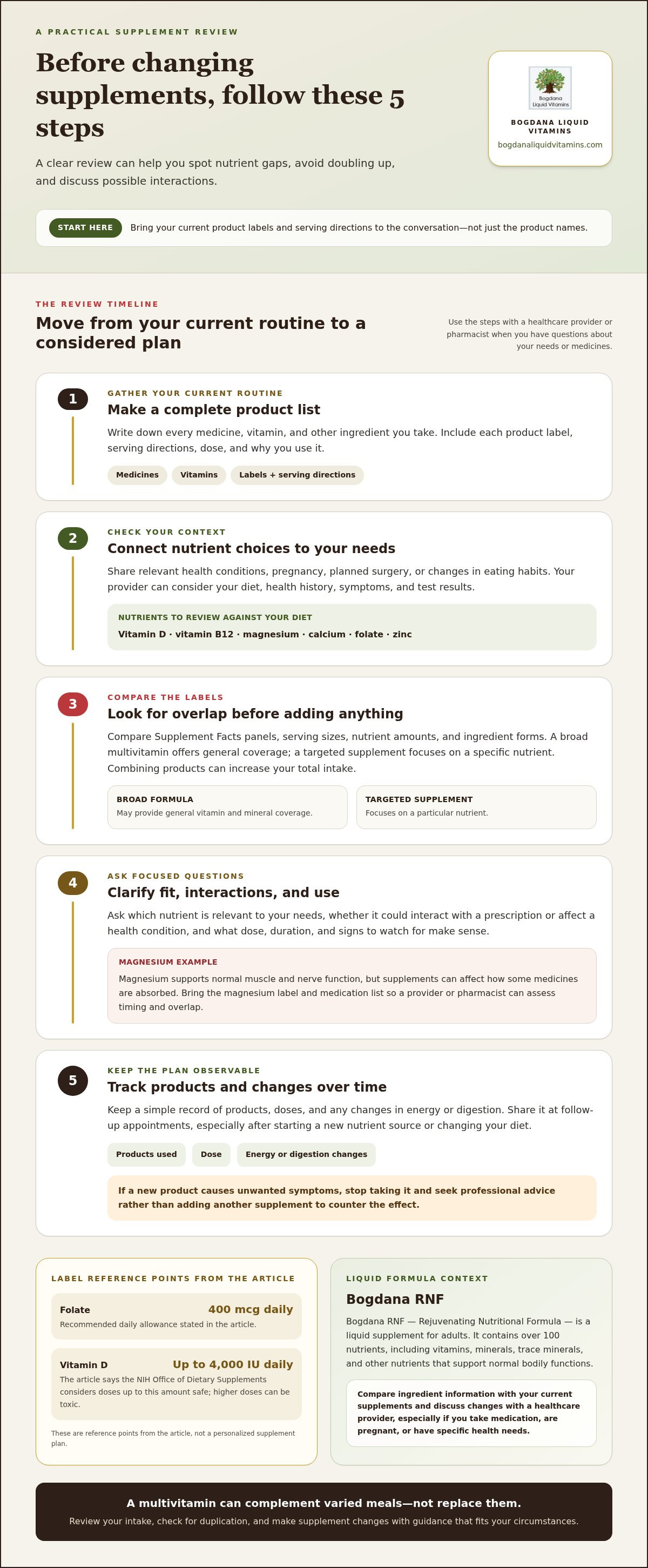
Before adding a supplement, give your healthcare provider an up-to-date list of medicines, vitamins, and other ingredients you take. Include product labels and serving directions, and explain why you take each one. This can help identify duplicated nutrients and potential interactions that may affect how a medicine works.
Share relevant details about any health condition, pregnancy, planned surgery, or changes in eating habits. For example, someone who is pregnant may need guidance on specific nutrients and amounts. Your provider can consider your diet, health history, symptoms, and test results before recommending a change. Do not use a supplement in place of medical care to prevent or treat disease.
Ask focused questions: Which nutrient is relevant to my needs? Could it interact with a prescription or affect a health condition? What dose and duration make sense, and what should I watch for? These questions can clarify the likely effects and whether a targeted nutrient or multivitamin better suits your routine.
Magnesium is one example worth discussing. It supports normal muscle and nerve function, but supplements can affect how some medicines are absorbed. Bring the magnesium label and medication list so your provider or pharmacist can assess timing and overlapping ingredients. If a new product causes unwanted symptoms, stop taking it and seek professional advice rather than adding another supplement to counter the effect.
Keep a simple record of the products you use, their doses, and any changes in energy or digestion. Share it at follow-up appointments, especially after starting a new supplement or changing your diet. This will help distinguish a supplement’s effects from other changes and make it easier to adjust your plan thoughtfully.
Bogdana Liquid Vitamins: Bogdana RNF - Rejuvenating Nutritional Formula
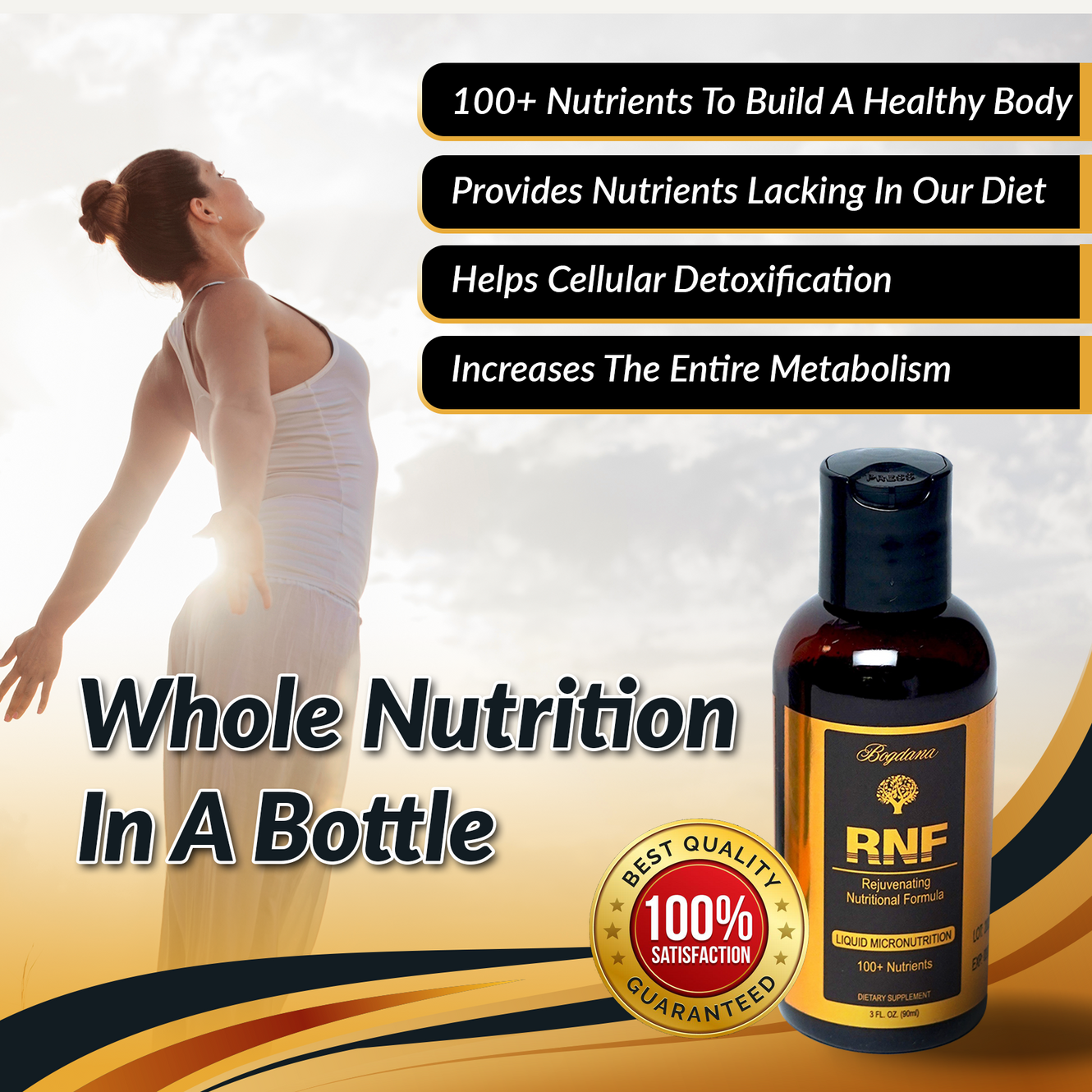
Bogdana RNF - Rejuvenating Nutritional Formula is a liquid supplement for adults seeking broad nutritional support in one formula. It contains over 100 nutrients, including vitamins, minerals, trace minerals, and other nutrients that support normal bodily functions.
After reviewing your diet and possible nutrient gaps, consider whether a comprehensive formula fits your routine. Broad coverage may suit you if you want to support overall health without assembling several individual nutrient products. Compare the ingredients with your current supplements and discuss changes with your healthcare provider, especially if you take medication, are pregnant, or have specific health needs.
A supplement works best as part of a balanced approach that includes nourishing foods and guidance suited to your circumstances. For details about Bogdana RNF, contact Bogdana Liquid Vitamins.
Make your next supplement choice a considered one
Make your next supplement choice a deliberate part of your wellness routine. Rather than chasing the longest ingredient list, consider how a formula fits your everyday diet, current products, and wellness goals. The best all-in-one supplement for overall health could be fit for your needs, not a shortcut around nourishing food or informed care.
Take one practical next step: keep your supplement labels together, note what you take and why, and review the list when your diet or health priorities change. This habit can help you make clearer choices and avoid treating supplements as a set-and-forget decision.
Steady, informed choices can help you build a manageable routine that supports your long-term wellbeing. Move forward one thoughtful step at a time.
Frequently Asked Questions
What about some popular supplements that don’t actually work?
A supplement’s popularity doesn’t prove it delivers every advertised benefit. In a multinational trial involving 35,553 men, selenium and vitamin E, alone or together, did not benefit prostate cancer prevention. Treat broad claims with care: look for evidence about the specific ingredient and outcome. Don't assume a supplement will help because it’s widely used.
Are multivitamins necessary?
No, not everyone needs a multivitamin. Someone who eats a varied diet and has no identified nutrient gaps may have little reason to take one. Start by reviewing a typical week of meals and noting restrictive eating patterns, life-stage needs, or gaps identified by a clinician. Then decide whether a broad formula would add useful coverage.
What constitutes a good reason to take a nutrient supplement, versus a bad reason?
A good reason is a specific need, such as choosing vitamin B12 because a vegan diet excludes common food sources. A bad reason is expecting a supplement to erase poor sleep, replace balanced meals, or cure a disease. Before purchasing, name the nutrient, why it may be needed, and how you’ll assess whether it fits your routine.
Can supplements prevent disease?
Do not rely on a general supplement to prevent disease or replace established preventive care. Supplements provide nutrients, but that does not mean they prevent illness. Keep up with routine screenings and other care recommended for your circumstances, and discuss a supplement’s purpose with your healthcare provider. Be especially cautious of products that promise to prevent several unrelated conditions.
Why supplement in the first place?
Supplements can help address a dietary shortfall when food choices, absorption, or life stage make it harder to get a nutrient. For example, vitamin B12 may warrant attention for someone eating a vegan diet. Start by identifying the potential gap, then consider food sources and whether supplementation suits your needs instead of adding products without a clear purpose.