Vitamins That Don’t Cause Nausea and Gentler Forms to Try

Finding vitamins that don't cause nausea often starts with two practical steps: take supplements with food and choose a form that you tolerate. Calcium ascorbate, magnesium glycinate, and iron bisglycinate may be easier for some people to tolerate, but the right option depends on the nutrient and your individual response.
A queasy stomach after taking a multivitamin can be frustrating, especially when you’re trying to support your health. Vitamins may cause nausea if taken on an empty stomach, in a high dose, or if ingredients such as iron, calcium, or vitamin C irritate the digestive tract. This guide explains possible causes, when to reassess a supplement, and which forms and habits may help you feel more comfortable.
Table of Contents
1. Why does taking it on an empty stomach cause nausea?
Yes. Taking a multivitamin on an empty stomach can trigger nausea, and a concentrated dose may intensify it. Without food, nutrients reach the stomach together, where iron, calcium, or vitamin C may irritate its lining. The reaction can include stomach upset, pain, or diarrhea.
Minerals add another factor. Iron and calcium can feel harsh for some people, while a large multivitamin dose delivers several nutrients to the digestive tract at once. High-dose supplemental iron of 45 mg per day or more can cause nausea and constipation, according to the National Institutes of Health Office of Dietary Supplements.
Individual sensitivity matters, too. Irritation may involve the stomach, esophagus, or small intestine, so the same formula may be comfortable for one person and cause discomfort for another. A sensitive stomach, reflux, gastritis, peptic ulcers, or irritable bowel syndrome can make supplement-related symptoms more noticeable.
To reduce the chance of nausea on an empty stomach, take a multivitamin with a meal unless the label or a clinician’s instructions say otherwise. Food may buffer contact with the stomach lining. If symptoms follow a particular formula, stop taking it and review its ingredients and amounts.
If you have a sensitive stomach, consider a multivitamin without high-dose iron, or an iron-free option when appropriate. Check the serving size and the amounts of iron, calcium, and vitamin C, since both the ingredients and total nutrient concentration can affect tolerance. These details can help you find vitamins that don’t cause nausea.
2. Is it normal to feel sick after taking vitamins?
Occasional nausea after a multivitamin can happen, but it’s a sign to review your supplement routine. High nutrient intake, taking several supplements together, or swallowing a chewable without enough food may contribute. The ingredients and serving size matter, as does your digestive sensitivity. If symptoms repeat, don’t assume you simply need to push through them.
Try taking your multivitamin with a full meal, such as breakfast or dinner. Food may improve tolerance and support nutrient absorption. If you take several supplements, consider separating them between meals instead of taking them all at once. Follow product directions, since some nutrients have specific timing instructions.
Timing can make a routine easier to manage. B vitamins are often taken earlier in the day, while magnesium may suit an evening routine. Taking a multivitamin with dinner or before bed may help some people avoid noticing mild nausea during daytime activities. But changing the time won’t address every cause, such as a high dose, ingredient sensitivity, or medication interactions. A healthcare professional can help assess persistent symptoms and your total intake.
Stop the specific vitamin that causes stomach pain. Seek medical evaluation for chronic diarrhea lasting more than two weeks; ongoing or severe nausea also deserves timely healthcare advice. Once symptoms settle, discuss whether a different dose, ingredient mix, or format could fit your wellness routine. If you’re exploring liquid supplements, browse the available liquid vitamin options as you consider what may suit you.
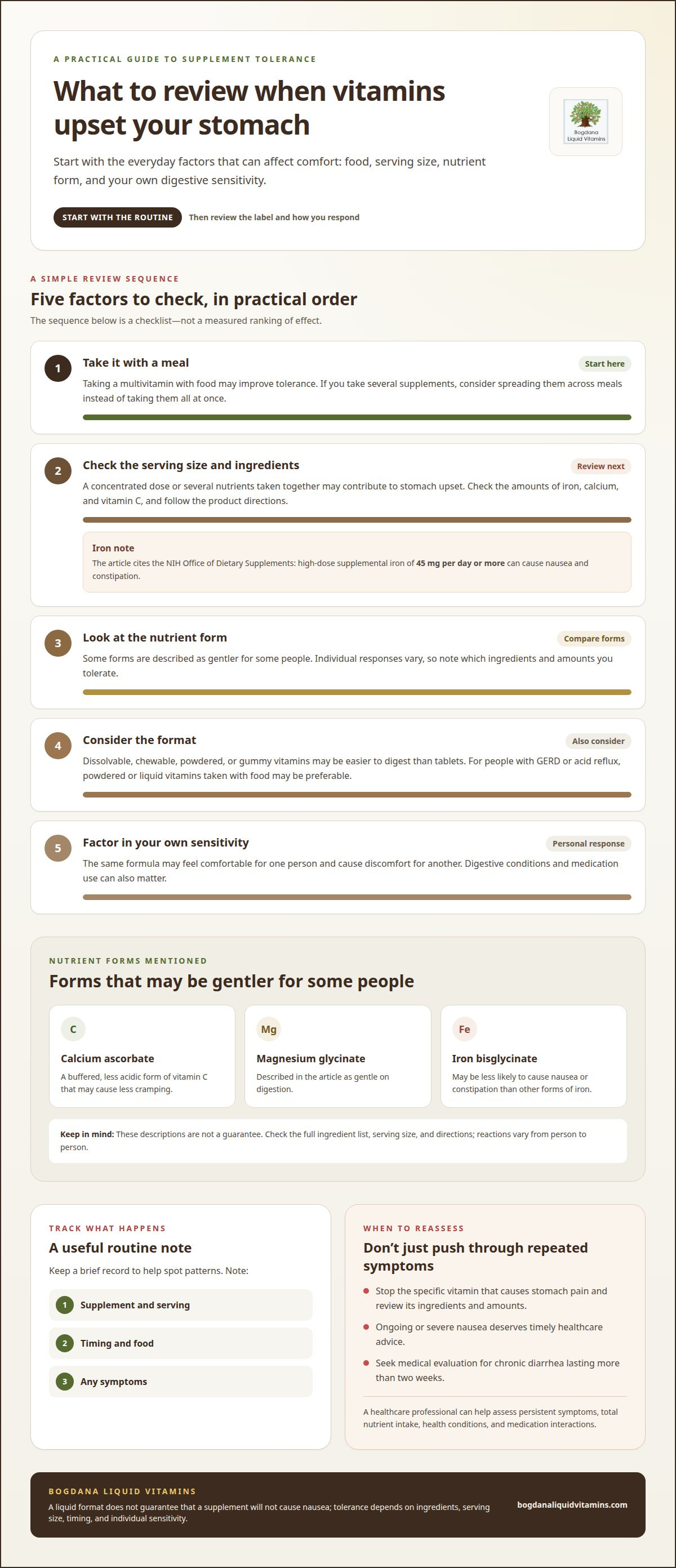
3. Vitamin and mineral forms described as gentler on digestion
Consider the nutrient form, not just the promise on the front of the label. Magnesium glycinate is described as gentle on digestion. Calcium ascorbate is a buffered, less acidic form of vitamin C that may cause less cramping. Iron bisglycinate may be less likely to cause nausea or constipation than other forms of iron. Reactions vary, so note which ingredients and amounts you tolerate.
The format may matter, too. Dissolvable, chewable, powdered, and gummy vitamins may be easier to digest than tablets. For people with GERD or acid reflux, powdered or liquid vitamins taken with food may be preferable. Avoid high doses of vitamin C if they trigger digestive symptoms, and discuss ongoing reactions with a healthcare provider.
Digestive conditions such as gastritis, peptic ulcers, and irritable bowel syndrome can make supplement-related nausea, reflux, or diarrhea more likely. A formula containing probiotics or other digestive-support ingredients isn’t automatically gentler. Check the full ingredient list and serving directions, since those additions may not suit everyone, especially if a particular ingredient already causes a reaction.
What should you look for on a supplement label? Check the form and amount of each nutrient, especially iron and vitamin C, along with the serving size and directions. If appropriate for you, look for calcium ascorbate, magnesium glycinate, or iron bisglycinate. A healthcare provider can help weigh your needs, digestive history, and medications before you switch formulas.
Bogdana Liquid Vitamins
Bogdana Liquid Vitamins offers liquid formulas for adult women, men, and seniors, as an option for those who prefer a liquid format. If you’re looking for broad nutritional support, Bogdana RNF ( Rejuvenating Nutritional Formula) contains over 100 nutrients. Its comprehensive approach may suit someone seeking one product for overall health rather than separate nutrient products.
A liquid format doesn’t guarantee that a supplement won’t cause nausea. Tolerance can depend on ingredients, serving size, timing, and individual digestive sensitivity. Review the formula’s ingredients and directions, and discuss supplement choices with a healthcare provider if symptoms persist, you have a health condition, or you take medication.
To learn more about whether Bogdana Liquid Vitamins may fit your wellness routine, contact Bogdana Liquid Vitamins.
Build a routine that feels sustainable
Choosing vitamins that don't cause nausea is a personal process, not a search for a one-size-fits-all promise. Keep a brief note of the supplement, serving, timing, food, and symptoms. This can help you identify whether an ingredient, amount, or routine seems connected to discomfort. Share your notes with a healthcare professional, especially if you take medication or manage a digestive condition. If nausea persists or worsens, seek medical advice rather than repeatedly trying the same product.
Wellness routines are easier to maintain when they suit your needs and feel comfortable over time. Take an informed next step, and give yourself room to adjust thoughtfully.
Frequently Asked Questions
Why do multivitamins make you nauseous?
Taking several tablet supplements together can add to the digestive workload. If you use multiple products, follow each label’s directions and consider spacing tablet supplements 2-4 hours apart. This can help reduce the load on your gut. Keep your medication schedule in mind too, since supplements can affect how some medicines are absorbed or metabolized.
Why do vitamins make me nauseous but not my friends?
Your total nutrient intake may differ from someone else’s, even if you take the same multivitamin. For example, your friend may not take other supplements or eat fortified cereal, while you do. Compare your full routine, including fortified foods and drinks, rather than focusing only on the shared product. That broader picture may help explain why your experiences differ.
Why does taking it on an empty stomach cause nausea?
Without food in your stomach, a supplement makes direct contact with the digestive tract and contributes to discomfort. Timing around activity can matter, too: exercise may aggravate heartburn or reflux for some people. If workouts trigger symptoms, avoid taking a supplement immediately beforehand.
Can I take vitamins if I have GERD or acid reflux?
GERD doesn’t automatically mean you can’t take vitamins, but pay attention to medication timing. According to the U.S. Food and Drug Administration, levothyroxine and calcium or iron should be taken 4 hours apart. If you use levothyroxine, plan supplement timing with your healthcare provider so your routine accounts for both reflux and medication instructions.
Is it normal to feel sick after taking vitamins?
Nausea can happen, but feeling sick isn’t a necessary sign that a vitamin is working. If you’re unsure whether you need a supplement, consider food sources of nutrients: as dairy, leafy greens, and sardines provide calcium, while legumes, shellfish, red meat, and pumpkin seeds contain iron. Food is generally the preferred nutrient source when it meets your needs.